The balcony is an architectural and functional element** increasingly appreciated, and its presence or absence in a real estate solution not only strongly affects the value of the house, but also the choice by the buyer. But what are the types of balconies available? Let's discover them together starting from the function of this element.
The balcony aims to allow the owner of the apartment to face outside with the whole body**: in essence, its function is to allow residents the so-called "right of view**" . In this sense, the balcony constitutes part of the dwelling or even is prolongation of the real estate unit, an integral part of the building that contributes to both its aesthetic and its functionality. types of balconies are essentially two:
- Built-in balconies: these are manufactured by thread of the facade of the building. These balconies do not protrude and can even fall back in relation to the profile of the building. They are generally closed on two sides.
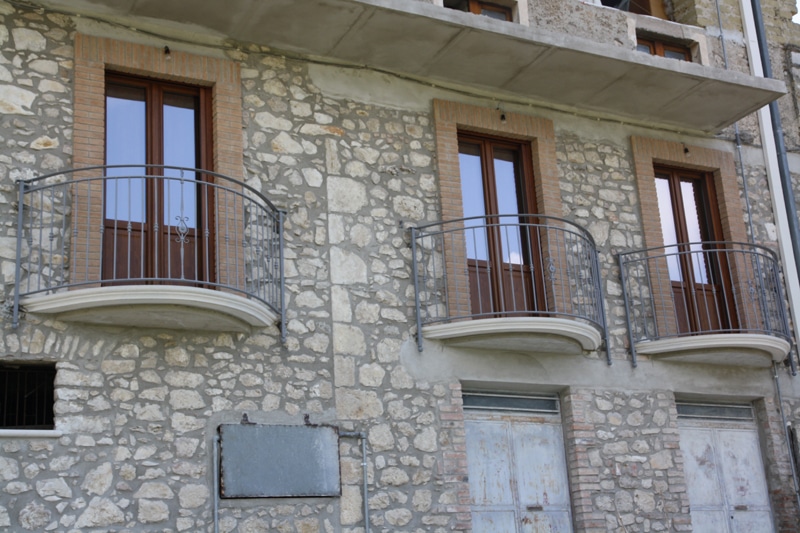
- Balconies with a sprawling surface: also called protruding balconies, represent the most common and used type of balcony. Their peculiarity is to protrude in relation to the façade of the property and, therefore, to be usually opened on three sides. They are secured by a parapet or a railing. In the category of the Built-in balconies are included, in turn, the so-called Balconies with a castle* , which are embedded in the perimeter of the building. The structure of these balconies is an integral part of the building and has a supporting function and a roof. The castle balconies are often present in historical buildings and of great artistic value.** Otherwise, the cones addict have no supporting role or covering of the building and represent, on the contrary, an exclusive extent of the apartment to which they are attached.
In many cases, the careful and calibrated structure of a balcony contributes to the architectural decorum of the building: the so-called """" character of high quality**" of these artifacts is normally evaluated on a case-by-case basis and implies always and in any case the design capacity of the building manufacturer. Net of the two macrotypes of balconies that we have just listed, there are of course ** different shades and variables** of these artifacts. For example, the common railing**, typical of the so-called "snackhouses", is very popular in the post-war period. Another variable is the partially adjective, which have the peculiar characteristic of being not completely embedded in the structure of the building, of which sometimes they use only one side wall.
Whatever the type to which they belong, the balconies often represent the sine qua non conditio for the choice of a real estate solution**: not only because of their comfortable view of the outside, but also because their presence increases the useful surface of the apartment and is extremely functional for the shelter of objects and tools and, for example, for the setting up of a small family garden.
A house without a balcony seems, to many, "monca" of something: and although it can be however splendid, spacious and bright, the possibility of moving a step outwards, towards the world outside the intimate and familiar sphere of the house, can hang substantially "the needle of the balance of the choice of our house of tomorrow.
To view videos, enable external content in your cookie preferences.