As we know, the bio-building (also called sustainable building) is a crucial alternative to traditional construction and operates in full respect of the relationship between man, building and environment. In practical terms, the bio-building aims to reduce as much as possible the impact of buildings on both the health of the planet and that of people, using resourceslimited and renewable, i.e. by polluting less.
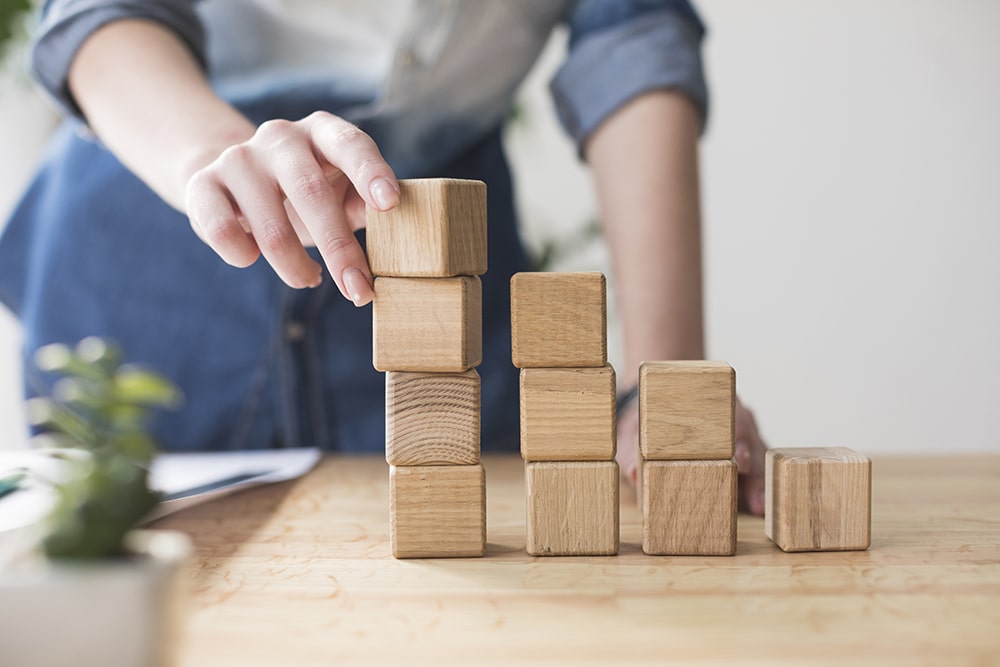
Starting from these basic assumptions, it is not surprising at all discover that wood is one of the supporting elements in the construction of passive houses. Wood is in fact the oldest material used by mankind to build and, after centuries of at least partial oblivion, has now returned to the limelight precisely because of its intrinsic ** alliance with the concept of environmental sustainability**.
The main benefits of using wood in passive houses are simple and, at the same time, decisive: on the one hand it allows to reduce waste of material** because it is completely recyclable and, on the other hand, it significantly affects the energy efficiency** of the construction. In this sense it is essential to remember that, since 2021**, all new buildings are expected to aim precisely at achieving this goal.
Wood in sustainable construction: attention to sources However, for wood** to really satisfy the eco-sustainability requirements of bio-building**, it is essential that it comes from forests managed in a sustainable and certified manner. In this sense, semi-finished wood widely used in construction must therefore be selected with the utmost attention**, always with the aim of combining their performance with greater respect for the environment.
In passive homes, these materials are widely used for their ability to isolate environments ** thermally** (but also acoustically!), promoting the creation of a virtuous microclimate within the domestic spaces and limiting to a minimum the thermal bridges and therefore the dispersions. This results in a massive reduction of the amount of energy required both to heat and to cool the environments.
Unlike the classic cement, whose production requires a ** considerable amount of energy** and ** generates carbon dioxide**, wood is totally renewable, • cleaned** • and can be successfully used for the realization of ** seismic buildings**, thanks to its innate qualities of elasticity.
The objective of tomorrow, in broader terms, does not concern the ever more widespread use of wood in buildings, but rather the realization of zero emission houses, or at least almost zero. This is the principle of passive house, understood as self-sufficient in its energy needs and able to guarantee the excellent living comfort now fundamental for the sector. The high performance houses (the so-called NZEB, Near Zero Energy Building) have been mentioned for some time and all the buildings built in Europe since 2021 will have to have this feature.
To achieve this goal, the bio-building aims to use not only more wood, but also materials for a long time set aside • and ** equally green** • and materials of new design, the result of important investments in research and development.
The rediscovery of historical materials in bio-building It is inevitable: the heart of bio-building is environmental sustainability combined with housing comfort. Whether it is new buildings or the consolidation or consolidation of existing structures, the director on which to move is always that of the materials that impact as little as possible on the health of the planet.
So, in addition to the aforementioned wood, we are very much looking at historical and traditional materials which, for centuries, have been forgotten in favour of those used in traditional construction.
Among these, the Roman mortars** ' which differ from modern cements not so much in terms of materials, but rather of production methods, in particular the cold mixing** • various certified calcium for both raw materials and production cycle.
Not to mention unpublished materials such as lolla di riso and even gusti d'uovo, which would be perfect for creating new and extremely performing mortars "green" . Specifically, lolla di riso is rich in silica and incinerated in biomass plants can be used as raw material. For the egg pods, they contain 98% pure calcium carbonate (compared to 70-80% guaranteed by a quarry stone) and can be cooked at classic mortars), saving energy and reducing CO2 emissions.
To view videos, enable external content in your cookie preferences.