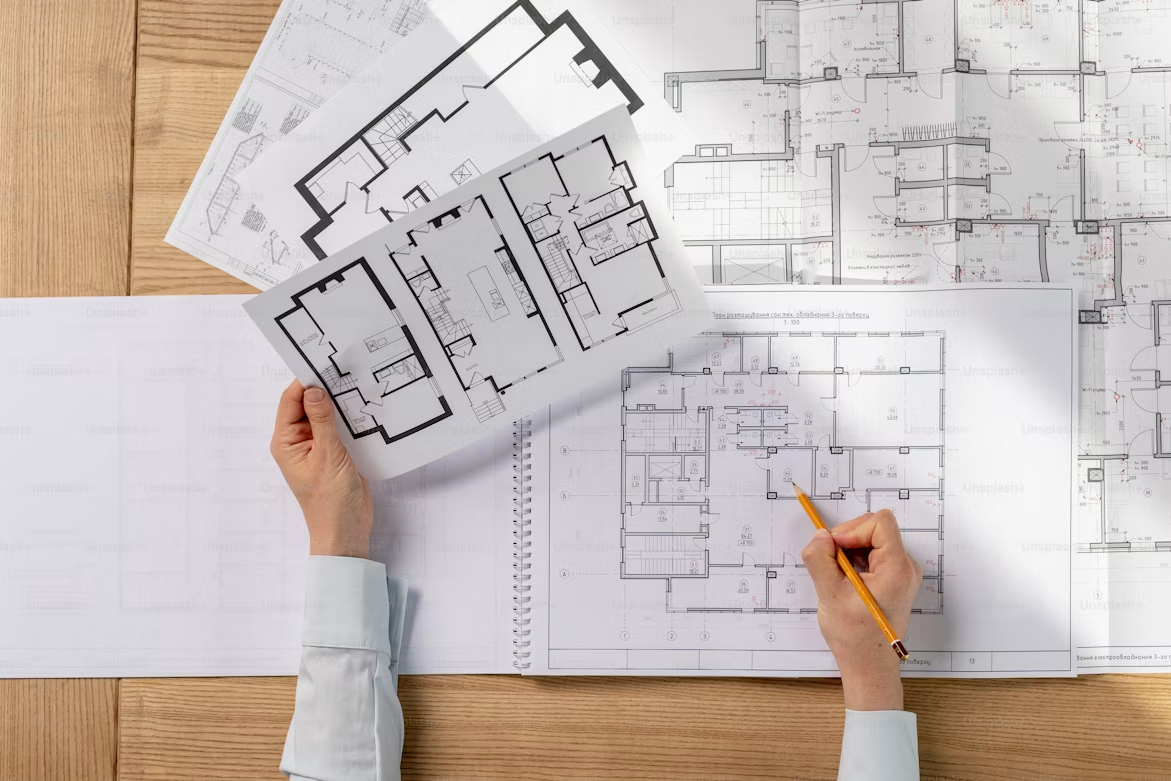
Knowing the classes and cadastral categories is essential for those who own or want to buy a property in Italy. This information is necessary to understand the legal and commercial value of a property and, consequently, to make more informed and informed choices. In very broad terms, the cadastral categories classify the property according to their intended use, while the cadastral classes differentiate the property in the same category according to criteria of type qualitative and productivity (i.e. the ability of a property to generate income). Both directly influence the calculation of property taxes, since each property, according to its class and category, has a Cadastral Return** which determines the amount of the taxes to be paid.
Definition and overview of cadastral categories The cadastral categories classify the properties according to their destination of use with the aim of facilitating the tax and administrative management of the properties. Each property is therefore assigned a specific category, determined by its main function. The cadastral categories are different, and the most known are those to follow:
- A: residential properties (apartments, houses, villas).
- B: public or collective properties (schools, hospitals).
- C: commercial and craft properties (shops, laboratories).
- D: productive properties (factorys, industries).
- E: properties at particular destination (stations, ports).
- F: unclassified real estate units (areas under construction, ruins). As mentioned above, this subdivision is useful for establishing the cadastral value** and for the calculation of taxes.
Definition and characteristics of cadastral classes The cadastral class is essentially a subdivision that differentiates the buildings within the same cadastral category. The distinction is based on criteria such as the quality of the property, its position and its state of preservation. In other words, the cadastral classes offer an indication of the quality and relative value of a property compared to others in the same category.
The impact of the cadastral class on the valuation of a property is considerable: it directly affects the cadastral rendita and, consequently, the market value of the property and (again) on the taxes to be paid. This means that a property with a higher cadastral class tends to be valued more, since it reflects a higher quality or a better position. There are two main categories of cadastral classes:
- **Cadastral class number (from 1 to
- Cadastral class U ("unique"): This category is assigned when there is no need to distinguish classes for a particular type of building or category of buildings. This system helps to identify the tax value of a property** according to its redditivity.
Difference between class and category of building and criteria of assignment Clear the definitions of class and category of building, let us now clearly summarize what differentiates them, that is their function: the cadastral category indicates the destination of use of the property (housing, commercial, industrial, etc.), while the cadastral class establishes its quality level within the same category, according to criteria as state of conservation and position.
Let's take a practical example: category A includes residential properties, but with different classes such as A/2 (civil housing) and A/3 (economic housing). This specification affects value and taxation, since properties of different classes will have Catastal yields. As for the criteria of assignment of these parameters, it must be borne in mind that the catastal categories are assigned according to the use destination of the property, as defined by the legislation. Therefore, each property is classified according to its main function: housing, commercial, productive or other. It is a very practical and intuitive subdivision that allows to manage the real estate in a uniform way for tax and administrative purposes.
Instead, we explained that the cadastral classes serve to differentiate the properties within the same category, taking into account a series of qualitative criteria. These criteria include:
- Catastal area: of the entire property, measured in square meters.
- Destination of use: i.e. the use for which the property was designed (home, office, shop, etc.)
- Geographical position: a property in the city centre will generally have a higher class of cadastral than one in the suburbs.
- Features, finishes and construction quality: higher classes will be assigned to high-quality or advanced-tech properties. This process allows to differentiate the value of the buildings belonging to the same category, primarily according to their quality standards. territorial section of the Revenue Agency determines the cadastral class of a property, based on two main criteria: the cadastral category and the cadastral income, i.e. the ability of a property to generate income, calculated according to the variables mentioned above.
Because knowing your class and category is important and how to verify them Having a clear idea and understanding of the class and category of your property is essential to know the tax impact because, as indicated above, this information affects the calculation of different taxes related to the property. At the same time, these data are useful for anyone who wishes to buy, sell or restructure a property, since they can help determine the value of the property.
It is important to bear in mind that knowing the class and category of the cadastral of your property is not at all complex: it will be sufficient to request a cadastral view, an official document that provides all relevant information about the property, and that is available from the cadastral offices competent or through procedures online through the ** Portal of the Revenue Agency**.
Update of category or cadastral class: when and how? We conclude by remembering that it is possible update both the class and the cadastral category of a property. Update of cadastral category may be necessary in different cases, such as a ** Significant restructuring** or a change of destination of use of the property (more information on the circumstances which require such a procedure is available in this ** interesting in-depth on Biblus**). If, for example, an apartment is transformed into an office, this intervention may require an update of the cadastral category. How to proceed? The update can be done through ** special practice to be submitted** to the Agency of Revenue**. The process requires the compilation of specific forms and, in many cases, the involvement of an authorized technician for the preparation of the necessary documentation, such as the updated cadastral structure. It is also to be borne in mind that the procedure involves certain costs**: in addition to the fee for the surveyor, the architect or the engineer for the necessary cadastral practices, it will be necessary to count the rights of secretariat to the Catasto and the cost of any construction works where these are necessary for the change of destination of use of the property.
Finally, regarding the updating of the cadastral class, also called .variation of the cadastral class., it may be requested by the Municipalities to the Revenue Agency for private-owned urban real estate units located in municipal microzones, if there is a significant difference between the average market value and the average cadastral value of the buildings. It is possible to know the reference regulations and details of the process in this practical article published in VisureItalia.
To view videos, enable external content in your cookie preferences.