Lombardy is often of its lakes The lakes of Como, Iseo and Maggiore are in fact both natural scenery of rare beauty and real cultural and residential ecosystems in which landscape, history and architecture merge. In summer, these places become the beating heart of a conscious and refined tourism, but also privileged spaces in which to live in harmony with nature. For architects, designers and builders, the Lombard lakes are a sort of open-air laboratory, in which to experience a way of building that enhances light, silence, view of the water and deep bond with the context.
It is from these landscapes that comes an evolved idea of quality of living.
A geography carved by ice: origin and charm of Lombard lakes The great Lombard lakes  lario, the Sebino and the Maggiore  have a common glacial origin. During the geological eras, the erosive action of the alpine glaciers has dug deep valleys among the Prealps, creating large basins that, at the end of the glaciations, have filled themselves with water. It is so that some of the most sublime and suggestive lake basins of Europe have been born, true natural monuments to the shaping power of time.
Although sharing this genesis, each lake has a distinctive morphology: Lake Como develops in the form of Nature, history and construction thus form a unified and stratified cultural landscape, where every architectural intervention dialogues with the environment and contributes to defining the unique identity of each lake.
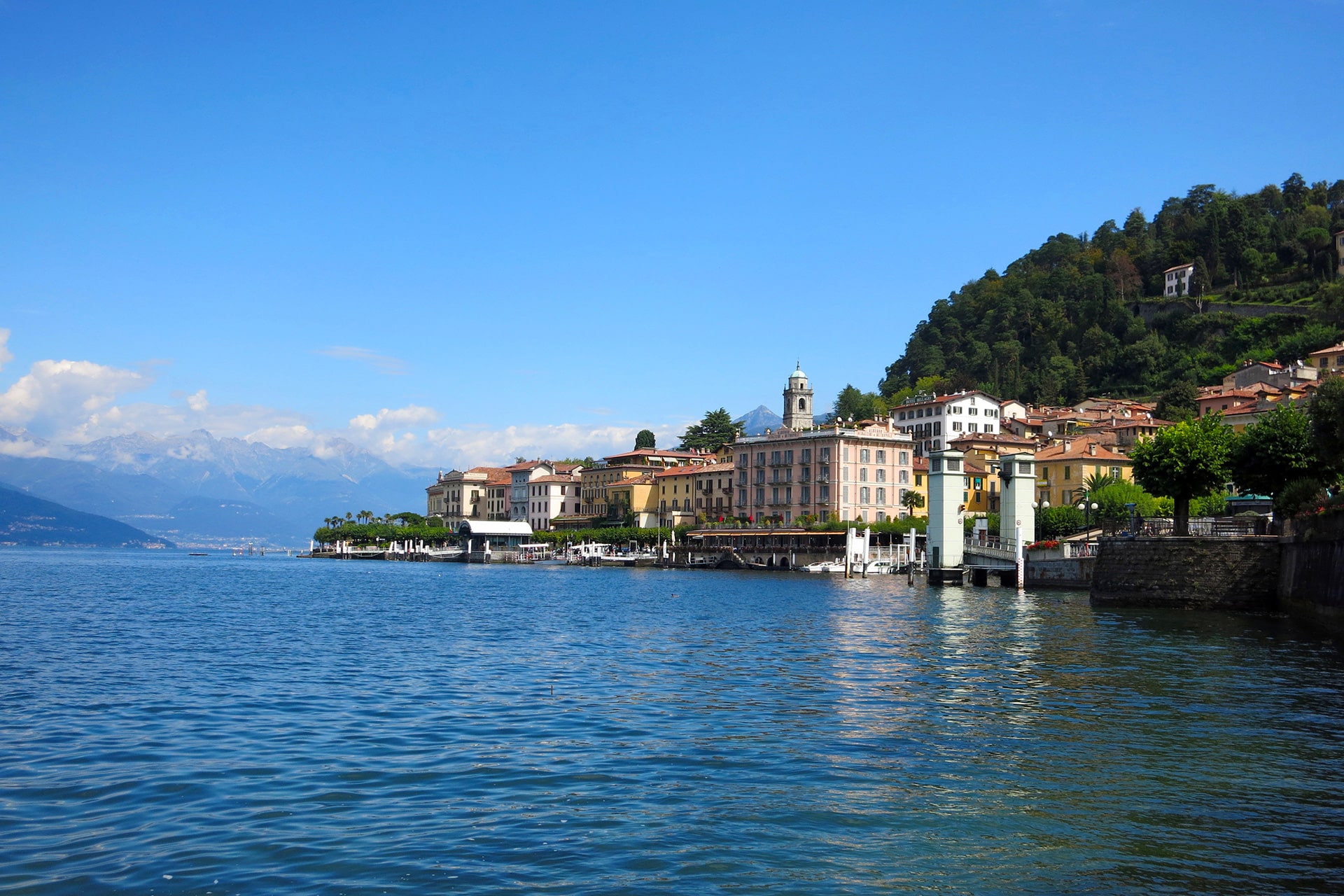
Lake Como, between discreet luxury and integrated architecture Lake Como is one of the most iconic places of the Italian and international scenery. Its characteristic shape is reversed , with the three branches that meet in the fascinating Bellagio, reflects a complex morphology made of jagged coasts, rocky walls, green promontories and slopes that go steep down to the water. This peculiar natural articulation has made Lake Como both fascinating to live and ideal to develop an integrated architecture of great quality.
On its shores are overlooked some of the most famous villas in Italy, such as Villa Carlotta, Villa del Balbianello or Villa d'Este, which tell centuries of aristocratic and cultural history. However, alongside the historical heritage has developed in recent decades a new contemporary residential language, in which architects and designers have been able to reinterpret the genius loci in a modern way. The use of natural materials, large glass openings and essential volumes allow to create living projects in harmony with the landscape, which dialogue with the lake and its variations in colour and light. Here, the concept of lifestyle takes on a profound meaning: living on Lake Como means choosing a dimension made of charm, silence, nature and art. The panoramic gardens, the terraces overlooking the water, the private marinas and the artistic installations outdoors define an elegant and discreet lifestyle, in which architecture is not imposed, but accompanies the daily.
Lake Iseo: sustainability, villages and landscapes to live Perhaps less famous but certainly not less fascinating of the Lake Iseo • Sebino is a jewel set between the provinces of Bergamo and Brescia. Its profile, framed by green hills and pre-alpine peaks, preserves authentic landscapes and a natural heritage of great value. At the center of the lake is Monte Isola, the largest inhabited lake island in Europe, reachable only by ferry: a place suspended over time, where mobility is sweet and silence becomes part of the experience. The Sebino is also distinguished by its commitment to sustainable development models. Sebino peat bog, a protected nature reserve, testify to the richness of local biodiversity and are a symbol of the possible balance between environmental protection and responsible use. This approach is also reflected in architectural and urbanistic choices: the coastal villages, as Lovere and Iseo, are experiencing important urban regeneration interventions, with the recovery of historic buildings (an example is The splendid Palazzo Ferlendis, on which Schiavi Spa intervened), the enhancement of the existing heritage and the creation of new public spaces attentive to the context. The architecture on Lake Iseo favours local materials, contained volumes and solutions that integrate with the morphology of the territory: from the historical residences skillfully restored to new houses with low environmental impact, the residential offer reflects an increasing attention to sustainable living. This constructive philosophy makes the Sebino an increasingly attractive destination for those seeking an authentic, natural and cultural alternative to mass tourism.
Lake Maggiore: historical elegance and international charm According to Italian lake extension, Lake Maggiore develops along a north-south axis that crosses Lombardy, Piedmont and Switzerland. This cross-border dimension gives it an international and varied identity, which attracts tourists, residents and investors from all over the world. Its banks, gently wavy, are framed by hills and mountains that create a mild microclimate, ideal for Mediterranean vegetation and for a high residential livability.
The landscape of Lake Maggiore is dotted with period villas, historic hotels and botanical gardens that reflect the taste and elegance of the nineteenth century aristocracy. The Borromee Islands, with their baroque palaces and English parks, are among the best known examples of how nature and architecture can merge into a harmonious and scenic composition. Alongside these historical testimonies, contemporary residential and receptive projects are developed, characterized by a sober, integrated and respectful style of the context.
Along the Lombard shores of the lake , in particular between Laveno, Luino and Angera , there are some of the most sought-after residences in the region. Here, the architectural design aims to preserve the historical identity of the place through the recovery of existing buildings and the use of natural materials, such as stone and wood, that harmonize with the landscape. The attention to detail and the care of the outdoor spaces with terraces, arcades and panoramic gardens complete a high quality living framework.
Like the lake landscape, architecture and lifestyle Building along the Lombard lakes means facing a design challenge in which nature, aesthetics and functionality are called to live together in perfect balance.The lake landscape requires a precise orientation of the architecture, which must enhance the view on the water and promote the visual and perceptive relationship with the surrounding environment. The best architectural solutions are therefore distinguished by the ability to dialogue with the morphology of the place: natural slopes, articulated shores, vegetation Pre-Alpine and panoramic views must necessarily become active elements of the project. The building adapts to the ground and not vice versa, respecting the landscape lines with light volumes, staggered floors and green covers that reduce the visual impact.
Materials play a fundamental role: local stone, wood, neutral plasters and large glass surfaces allow you to harmonize new or renovated buildings with the context, creating spaces that breathe with nature. The natural light, always changing in proximity to the water, is exploited to amplify the perception of the interior and exterior environments, generating a sense of continuity between the living and the landscape.
Many recent interventions, both of recovery and of new construction, show how it is possible to combine tradition and contemporary: just think of the renovated villas with criteria of energy efficiency, or the residential complexes that reinterpret the typology of lake house in a sustainable key. In this way, the landscape is both a frame and a guiding principle for building well, with respect and foresight.
Urban planning in the lake contexts, between protection and vision Urban planning in the Lombardy lake areas must ensure the meeting between two often lively needs: the protection of an environmental and landscape heritage of the highest value and the need to promote a quality residential and tourist development. The landscape constraints imposed at regional and national level are fundamental tools to preserve the visual identity of the places: along the lakes, any new intervention must respect distances from the beaches, contained heights, harmony with the existing building and continuity of the landscape. guidelines encourage the adoption of light and integrated infrastructures • such as footpaths, eco-friendly landing sites, green public spaces • which do not interfere with local biodiversity, but enhance its usability. At the same time, a polycentric urban development is promoted, capable of strengthening historic centres, avoiding the dispersion of settlement and ensuring a high quality of life.
Local institutions play a leading role in defining coherent and sustainable projects. Good practices already initiated from the recovery of urban waterfronts to the creation of ecological corridors • demonstrate that it is possible to design in the lake contexts with vision and vision system. In these delicate scenarios, urban planning becomes a tool for balancing aesthetics, livability and responsibility.
Quality of life on the Lombard lakes: an attractive factor for the public Living along the lakes of Como, Iseo and Maggiore means living in contexts that combine natural charm, urban livability and daily well-being. According to the survey 2024 of the Sun 24 Hours, the province of Como is located at 11° place in Italy (with its 14th position, Lecco is also well classified) for quality of life, thanks to a high availability of services, safety, attention to the environment and cultural offer.
These territories are appreciated for the variety of experiences they offer: from the quietness of the gardens and walks on the lakefront to the possibility of practicing mountain and water sports, to the participation in musical, artistic and gastronomic events that animate the villages in every season. The landscape directly affects lifestyle: here worldliness is intertwined with nature, in a refined balance that promotes psychophysical well-being. The presence of valuable properties, historical residences and new sustainable buildings makes the Lombard lakes attractive not only for those who choose to live there, but also for investors looking for lasting value. In an era that rediscovers the quality of the living space, the lakes are confirmed ideal destinations for those who want to live  or design  in harmony with the environment and time.
In conclusion, Lombard lakes are not only tourist destinations, but also inhabited landscapes, complex and meaningful territories, where the quality of life is measured in the dialogue between nature, architecture and culture. In this context, Slaves Spa continues to observe, interpret and build with vision, helping to define new ways of living cities and landscapes.
To view videos, enable external content in your cookie preferences.