Ecological houses are increasingly widespread in Italy and around the world. The design of these housing solutions provides for precise steps to arrive at the construction of a building that is connected with the environment and that meets its energy needs** thanks to the forces of nature. Bio-building is one of the sectors in greatest evolution and in continuous development. The ecological houses are an excellent compromise between savings, reduced ecological impact and comfort of those who live in them.
How to design an ecological home: all the steps to follow to build a perfect living solution
- To design an ecological house, a feasibility study must always be carried out, accompanied by a series of researches on the territory** to understand how the new building can meet its energy needs: data on solar radiation, data on precipitation, calculation of the electricity and thermal energy needs.
- During the design of an ecological house, we must ** pay the utmost attention to the materials used for the construction**. The choice of the correct materials will certainly save energy and, above all, limit the pollution related to the production of the building materials.
- The insulation of an ecological home can be guaranteed by a ** thermal coat, made of EPS or natural fibres** which in turn will ensure sound insulation, and the natural regulation of humidity with relative control over the onset of molds.
- An important part of the design consists in the est estimate of the costs of installing heating systems with radiation such as radiators, low temperature skirting, geothermal energy with heat pumps. Let us remember that any house can exploit a certain level of geothermal energy.
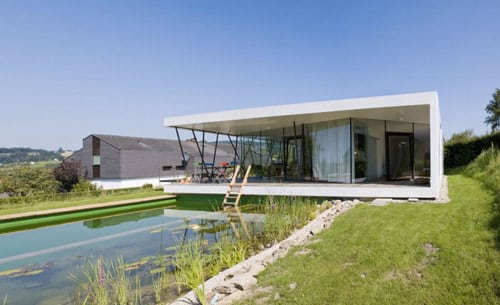
- The interior lighting can be guaranteed by low-energy skylights and systems (LED)**. The large windows are a classic of ecological homes: with the right sun exposure they are able to illuminate your home for a long time.
- An ecological house that is respected also provides ** a system of recovery of rainwater** that will then be redistributed to the house for sanitary use or irrigation of green spaces.
Three basic steps to build the best ecological home
- SCHOOL OF MATERIALS. Natural materials such as wood that must be certified, of quality and produced by qualified companies may be preferred for insulation materials of natural origin such as rock wool, cork or mineral wool.
- RENEWABLE and ACCUMULE. The choice of the energy system is fundamental. It is recommended to pair the traditional photovoltaic with the solar thermal, to heat the water for domestic use. In this way it reduces drastically the purchase of energy from the grid.
- Winding and cooling. For winter heating and cooling in summer air/air or air/water heat pumps that can be powered by photovoltaics are recommended. Windows and windows should be carefully evaluated because they help to isolate the house from unwanted changes. DOMOTICA. Today this science can enter directly into our homes to measure actual consumption, saving domestic energy and focusing on energy saving.
To view videos, enable external content in your cookie preferences.