The issue of cleaning** and sanitization** of domestic environments has become crucial following the recent emergency of COVID-19**. The containment of the action of possible pathogens and, more generally, the need to live in healthy domestic environments** has become imperative because the personal hygiene and the spaces in which we move represents one of the first and most effective weapons against contamination and contagion. It is therefore important to consider the sanification not so much as an activity to be carried out once and then forget it, but rather as a new habit to be acquired to keep the domestic environments safe from bacteria, viruses, molds, fungi, allergens and in general from any micro-organism characterized by an offensive potential towards the human being.
A clean, hygienic and sanitized house** is undoubtedly more healthy and safe** and, as a result, ensures an increase in the quality of life of the inhabitants. To understand exactly what the sanification is, we must move back and return to the decree of 4 March last, which takes up what was indicated on 2 February 2020 by the Ministry of Health on this very topic. Specifically, a series of actions for disinfection and sanitisation of public spaces at high traffic rates, such as collective and/or public places (think of cinemas, theatres, public offices!) but also private offices, i.e. offices. The same hygienic habits can and should be extended to private residences, whether they are apartments in apartments or villas, in order to create a health consistency globally.
Healthy domestic environments: some practical advice sanification is definable, within a home environment, as the set of good practices of deep cleaning aimed at achieving a high level of hygiene on all surfaces.
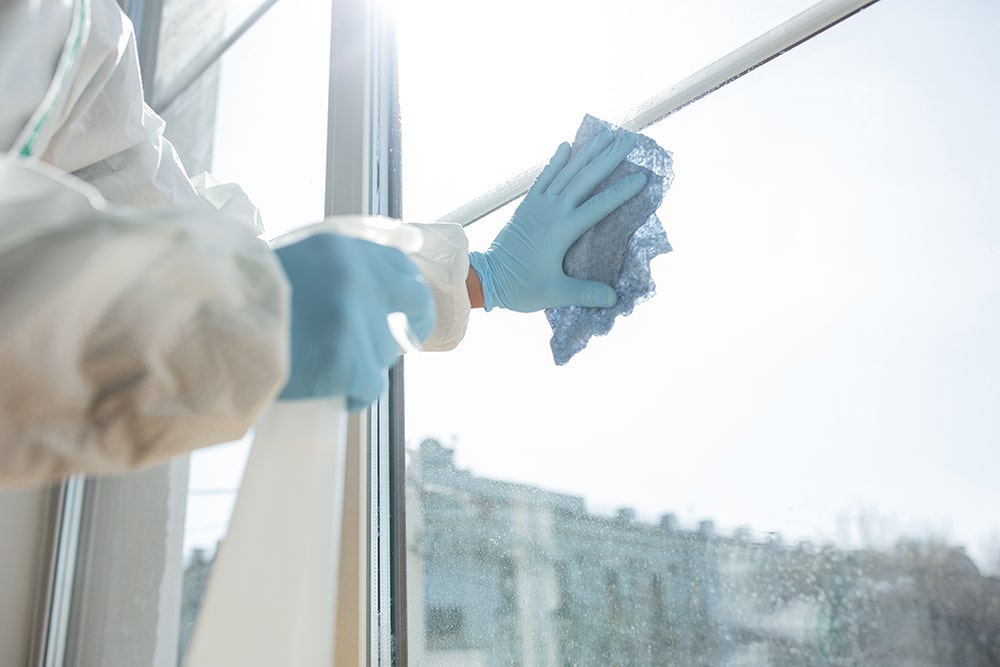
In particular following the Coronavirus emergency, the Ministry of Health recalls that sanitisation and deep cleaning should be especially relevant, in a regular and frequent way, all surfaces often touched: walls, switches, handles, curtains, doors, windows, bathroom toilets, dining tables, desks, chairs. For example, the clothes used to get out of the bathroom or bed linen are also provided by the washing process of the bathroom linen or bed linen at 90°C and specific detergent. Alternatively, at lower temperatures, we can operate with a washing based on water and bleach or ** sodium hypochlorite** based products. The sanification of the domestic environment is important because, every time we return home after being outdoors, we bring in our private spaces potentially dangerous bacteria and microorganisms from outside. In this sense, in addition to proceeding with the constant and deep cleaning of the premises, our advice is also to remove the shoes immediately, wash the hands and eventually ** change the clothes** once returned to the house. Obviously also the opposite rule is valid, that is to avoid to go out outdoor in slippers or • shoes from home • maybe to throw the garbage.
What is the difference between cleaning, sanitization and disinfection? Sometimes cleaning, sanitization and disinfection are understood as synonyms when, in reality, they identify very different procedures aimed at obtaining specific results. In cleaning all operations that aim to remove visible dirt from any surface, and are surface type activity, i.e. they cause no action at the level of the substrate but The disinfection is a more specific operation, which is carried out with the help of so-called medical and surgical**presidency products, and which aims to reduce the bacterial charge in an environment to a level not dangerous to humans or animals.
Finally, as regards the sanification**, especially the so-called environmental sanification** , it consists of a series of ** cleaning and disinfection operations** added to all the actions necessary to make a home space not only decontaminated by the offensive potential of pathogens, but also healthy and perfectly livable for people**.
Professional environmental health: how does it happen? What are the advantages As professional activities can be applied to professionals specializing in the sanification environmental, they can do condominiums and owners of apartments, villas and private residences. In this case, the level of sanitization guaranteed by the procedures will obviously be very high, and specialists will intervene with the help of professional products and equipment in order to eliminate from the environment any pathogenic agent. As a rule, the professional environmental health happens in three main ways, which will be defined according to the specifications of the spaces in which to intervene:
- Manual analysis: is carried out by specialized personnel using professional manual products and equipment.
- Sanification with aerosol dispensers: it is ideal for environments where there is potentially high risk of developing pathologies, but also for means of transport such as cars, vans, caravans, campers.
- Ozone Sanification: extremely effective, allows the almost total elimination of microorganisms present on the surfaces using a safe and environmentally sustainable method. Provantages of a sanitized home environment are numerous: from the reduction of the risk of contamination and infection from pathogens such as fungi, bacteria, viruses, molds to that of biological and chemical pollutants, from the reduction of the level of particles to the elimination of the level of allergens, from the elimination of bad odors to the increase of environmental well-being as a whole.
To view videos, enable external content in your cookie preferences.