In a historical phase in which the concept of environmental sustainability The vertical gardens** are now classified as the most popular trends ever due to their ability to transform urban surfaces into live oasis of greenThese innovative If, on the one hand, buildings multiply, on the other hand they tend to decrease the natural areas in the urban contexts**, resulting in a reduction in air quality and an increase in temperatures (this phenomenon takes the name of "Island of Heat"). Here, the vertical gardens represent an innovative and sustainable solution to these problems, since they offer a sustainable and relatively simple mode to reintroduce nature also in densely populated urban areas.
The cities that benefit from the presence of vertical gardens integrated in public and private buildings are mitigated the negative effects typical of the extreme cementification: the vegetation \live \ \ \ contributes in fact to the improvement of the quality of the air through the filtration of pollutants and the production of oxygen; the temperatures of the surfaces of the buildings are better regulated thanks to al insulation thermal guaranteed by the natural element, reducing the need for air conditioning and therefore increasing the energy saving; and the aesthetics of urban areas is enriched significantly.
Moreover, it is not a small detail . Vertical gardens promote biodiversity in urban contexts, providing optimum habitat for insects, birds and other life forms. This not only enriches the local ecosystem, but also improves the psychological well-being of the inhabitants**, which can benefit from the presence of green spaces in their vicinity and a closer, bilateral and virtuous communication with nature.
What are its types? A vertical garden** is a structure made up of plants growing on a vertical surface rather than horizontal. These gardens can be installed on the roofs and walls of buildings, both inside and outside, transforming bare surfaces into vibrating green carpets. For the optimal survival of vegetation, vertical gardens use support systems, irrigation and fertilization specially designed to keep plants in good health and promote their growth vertically.
In historical terms, the concept of vertical garden** is relatively recent, although drawing inspiration from ancient practices such as the ** hanging gardens of Babylon**, one of the seven wonders of the ancient world. The modern idea of vertical garden was developed in the 1980s by the French botanist ** Patrick Blanc**: More specifically, Blanc created the first vertical garden** using a system of light panels, felt and a sophisticated irrigation system, which allowed plants to grow on vertical surfaces without the help of traditional soil. As for the ** vertical garden types** existing, there are several
- ** Walls outdoor green**: they are installed on the facades of buildings and help improve thermal insulation, reduce noise pollution and embellish urban structures. They can also help mitigate the island heat effect in cities.
- Hot gardens: they are a vertical garden shape that also includes horizontal elements, such as green roofs. These gardens offer a versatile solution for limited urban spaces, allowing you to create live oases on roofs, solarium, balconies and terraces.
- Altitude gardens: They are built on high structures, such as terraces, large balconies and roofs. They offer green spaces in densely built urban areas and may include ornamental plants, urban gardens and recreational spaces.
- Green roofs: transform classic roofs into gardens, improving the thermal insulation of buildings, optimizing the flow of rainwater and increasing urban biodiversity. They can be extensive (with low maintenance and resistant vegetation) or intensive (with a greater variety of plants, similar to traditional gardens).
- Living Walls with integrated irrigation: these systems use facilities equipped with an automated irrigation system, which distribute water and nutrients directly to the roots of the plants. They are ideal for large installations that require minimal maintenance.
- ** Hydroponic systems**: in these gardens, plants grow without the use of soil, in an environment rich in nutrients supplied through water. Hydroponic systems are particularly efficient in terms of resource use and are often used in controlled environments such as vertical greenhouses.
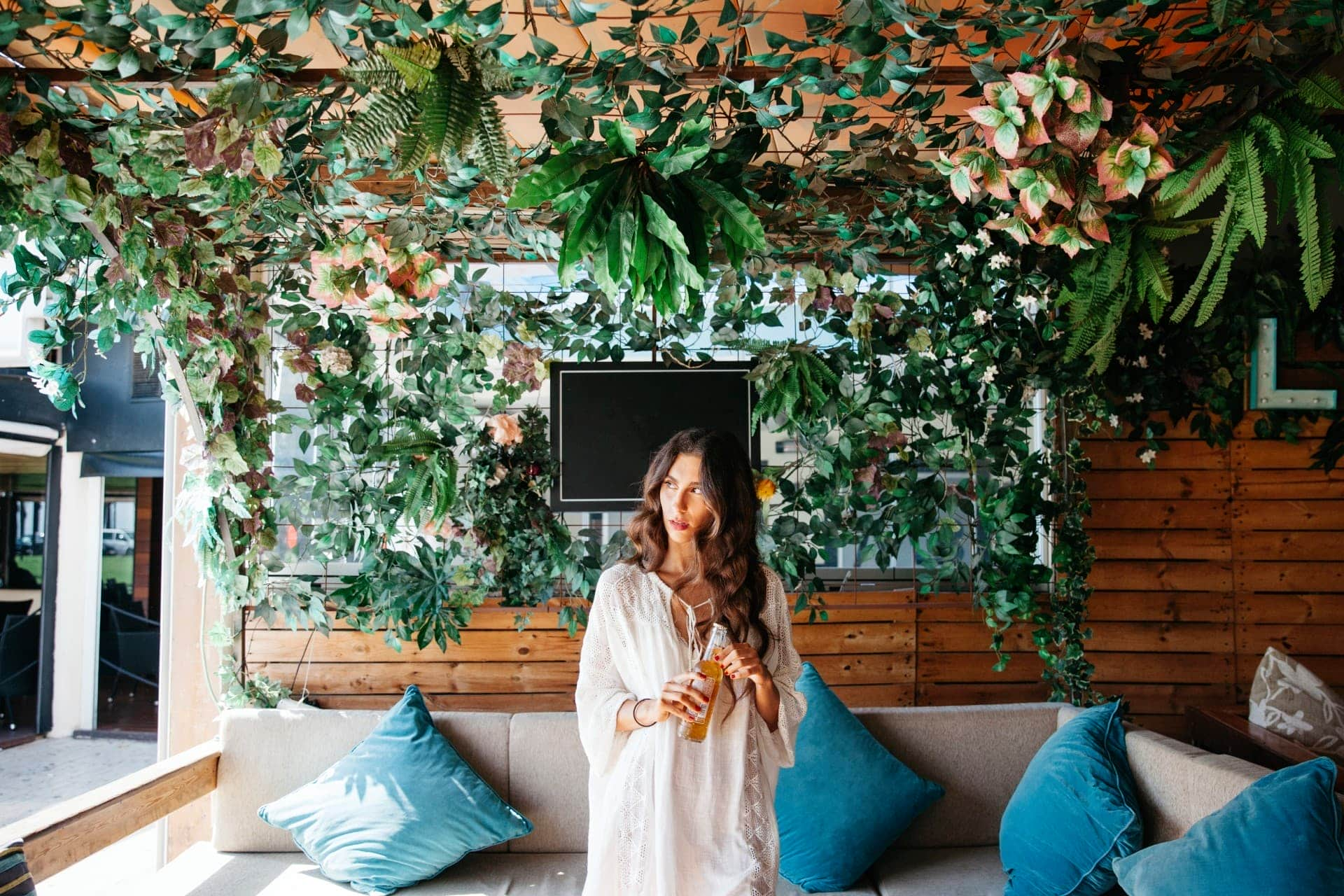
- Indoor green walls: are installed inside the buildings and serve to improve the aesthetics of the interiors, increase the quality of indoor air and promote a healthy microclimate thanks to the presence of mosses and plants. They are now increasingly common in offices, shopping centres and public spaces.
Here, therefore, the vertical gardens**, in their many declinations, offer a variety of solutions for the integration of green also in strongly urbanized contexts**. It goes without saying that the choice of the type of vertical garden will have to be defined in the design and construction phase according to the aesthetic, functional and environmental needs of each architectural work.
The best examples of vertical gardens in Italy The vertical gardens are successfully installed almost in every part of the world, and almost certainly their presence in the big cities will continue to increase in the future**.
As for Lyrics, there are no doubt already some excellent examples that, especially seen live, allow to understand the extraordinary benefits of this approach to urban planning:
- Bosco Verticale, Milano: located in the Porta Nuova district of Milan, it is certainly one of the most iconic vertical garden projects ever. Opened in 2014 and designed by the architecture studio Boeri Studio, the complex consists of two residential towers 111 and 76 meters tall respectively. The facades of the towers are covered with over nine hundred trees, five thousand shrubs and eleven thousand perennial plants, creating a real vertical wood that hosts different plant species. Aesthetically, the Vertical Wood enriches the urban landscape of Milan, acting as a symbol of innovation and sustainability. This project has also inspired similar initiatives in other cities, promoting the adoption of green solutions in urban areas.
- Fonderie Milanesi, Milan: the capital of Lombardy offers another excellent example of vertical garden with the Milan Foundry, showing how a abandoned industrial area can be converted into a living space and Vibrant thanks to the intelligent use of vegetation. Located in an old foundry, this structure now houses spaces for events, restaurants and offices, with green walls that decorate the buildings. Vertical vegetation harmoniously integrates with industrial architecture, creating an interesting contrast between the old and the new, and offering a green shelter in the heart of the city.
- University Ca' Foscari, Venice: an educational institution that has adopted vertical gardens as part of its commitment to sustainability and reduction of environmental impact. One of the best known examples is the vertical garden installed on the façade of one of the campus buildings: it is a green wall that not only improves the aesthetic aspect of the structure, but also contributes to thermal insulation of the property, reducing its energy consumption. Moreover, the vertical garden acts as a living laboratory for students, since it offers opportunities for study and research on urban biodiversity and environmental sustainability.
- Tacchi manufacturing, Florence: in this case, we are facing a project to convert an industrial space and its transformation into a modern and sustainable environment. This complex, originally used for tobacco production, has been renovated and now houses offices, cultural spaces and private residences. The integration of vertical gardens in the facades of buildings not only improves the aesthetics, but also contributes to the sustainability of the project, increasing the thermal insulation, improving the quality of the air and creating green spaces for residents and visitors.
- Ex Fiat plant, Turin: this iconic building for the history of our country has been transformed into a multifunctional area that includes offices, commercial spaces and residences. Specifically, vertical gardens have been used to cover the external walls of the buildings, creating a more welcoming and sustainable environment. Such solutions not only embellish the structure, but also offer environmental benefits such as the reduction of CO2 emissions and thermal insulation. The project shows how the integration of green solutions can revitalize abandoned industrial areas, transforming them into liveable and sustainable places.
Slaves Spa contributes to this new concept of sustainable architecture By integrating vertical gardens** into their own achievements: the most significant cases in this sense are the residences San Martino and San Martino2*, in the beautiful setting of the city of Lecco.
To view videos, enable external content in your cookie preferences.