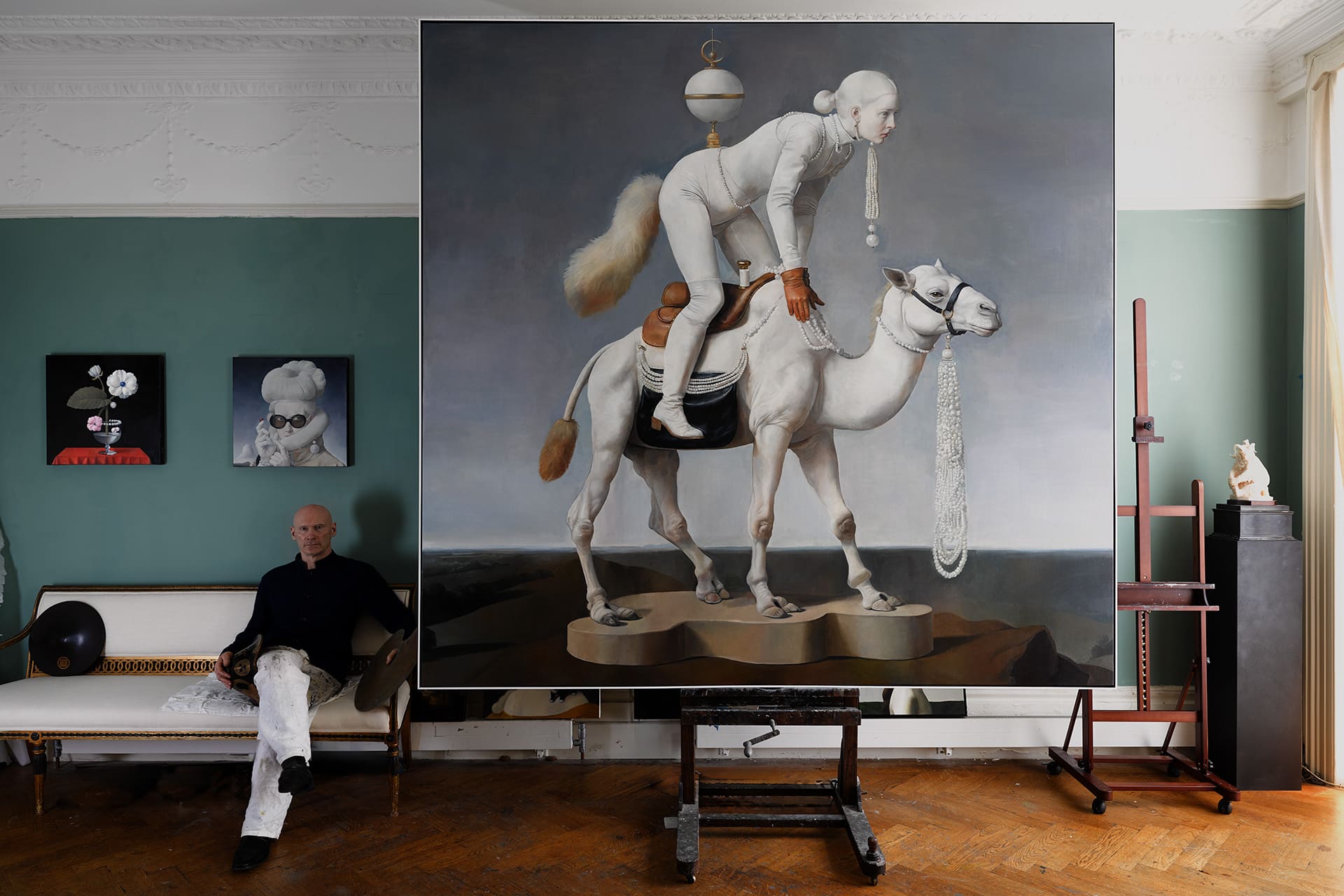
*** Wolfe von Lenkiewicz's cosmopolitan painting takes Magritte into the digital era and conquers the public. Between a Parisian catwalk and an international exhibition, the artist transforms the masterpieces of art history into prêt-à-porter icons for artificial intelligence, merging classic brush strokes, digital algorithms and suggestions of the couture haute.*** Sabino Maria Frassà. Among classic brush strokes, digital algorithms and virtual catwalks, an aristocratic artist reinterprets Magritte in the Instagram era. Wolfe von Lenkiewicz is descendant of Baron von Schlossberg, court painter of Ludwig II of Bavaria . He transforms the masterpieces of art history into prêt-à-porter icons for the age of artificial intelligence, bringing the taste of luxury and couture haute to the heart of contemporary imagination and driving the audience not only insane European. His creations 'impeccable in the realization \' nourish the past to transform it into an object of contemporary desire, weaving cultured quotations and images with high visual impact. Lenkiewicz winks the eye to the digital audience and, together with the world of luxury, fashion and communication: paintings suspended between the Magritian imagination, artificial intelligence and the aging language of advertising campaigns. Nothing is left to chance: every work is conceived in formats that perform best on social media, from the iconic square of Instagram to the new vertical imposed by the algorithm, thus becoming a perfect bridge between artistic tradition and new visual codes. Alongside institutional exhibitions, the artist has consolidated the international market and positioning in a d'élite collectionism. It is no coincidence that he crossed the boundaries of the couture haute: in 2023 he collaborated with the SHOWstudio platform reinterpreting in real time the collections presented during the Paris S/S Haute Couture Week, in a project that combined illustration, painting and fashion without binding to a single house but dialogue with the entire scenario of Parisian haute fashion. Lenkiewicz looks with admiration at the Renaissance studies but knows how to move with ease in the present, ready to shape his art for the times and for his customers. His process of adaptation and reinterpretation challenges traditional conventions and reflects on the fluidity of the image in the technological era, transforming icons of visual culture . from historical avant-gardes to pop aesthetics . in new narratives with a strong conceptual and provocative component. Recognized internationally, he exhibited in prestigious institutions such as the Musée Quai Branly in Paris, the Ateneum Museum in Helsinki, the National Museum in Stockholm and the Palais des Beaux-Arts de Lille. We interviewed him to better understand a language that, though rooted in the imagination of the past, constantly updates him and consecrates him as one of the most fascinating and controversial figures of the contemporary artistic landscape. It remains to be wondered whether his game with the history of art is a true reinvention or rather an accurate commercial restyling operation for the digital era. But one thing is certain: whether it is square or vertical, his work will always find the right shot.
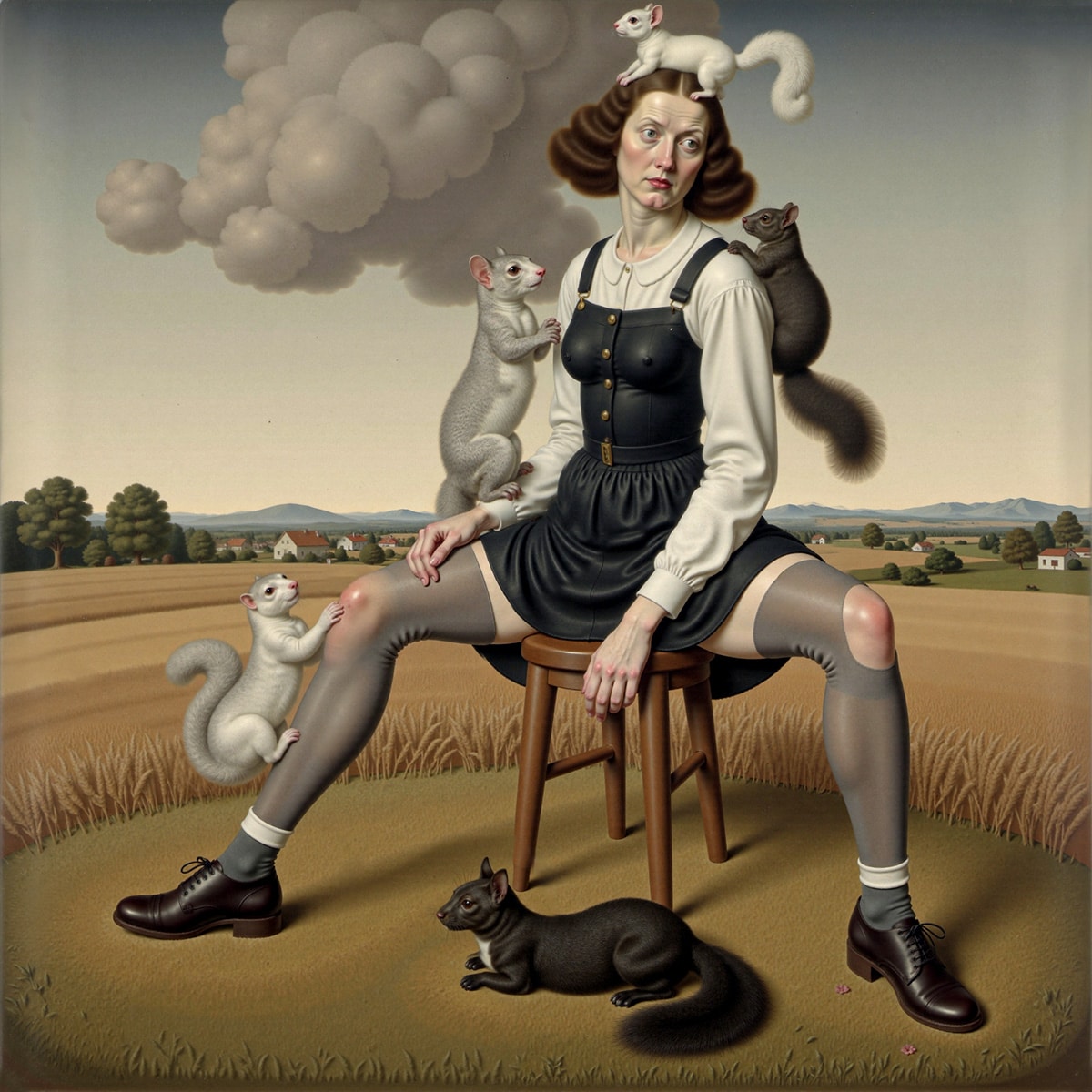
How did your family's legacy influence your relationship with art? My family's artistic heritage has always been a conscious presence in my journey, but my work is both a continuation and a break with that tradition. My great-grandfather, court painter for King Ludwig II of Bavaria, worked within the canons of his time, adhering to the conventions of official portrait. Instead, I feel free to deconstruct and rebuild visual language, without aesthetic constraints related to formal painting. However, I retain a deep respect for the technical precision and craftsmanship of the great painters of the past, elements that I consider fundamental in my research.
** We make some names of masters who admire even in contemporary art
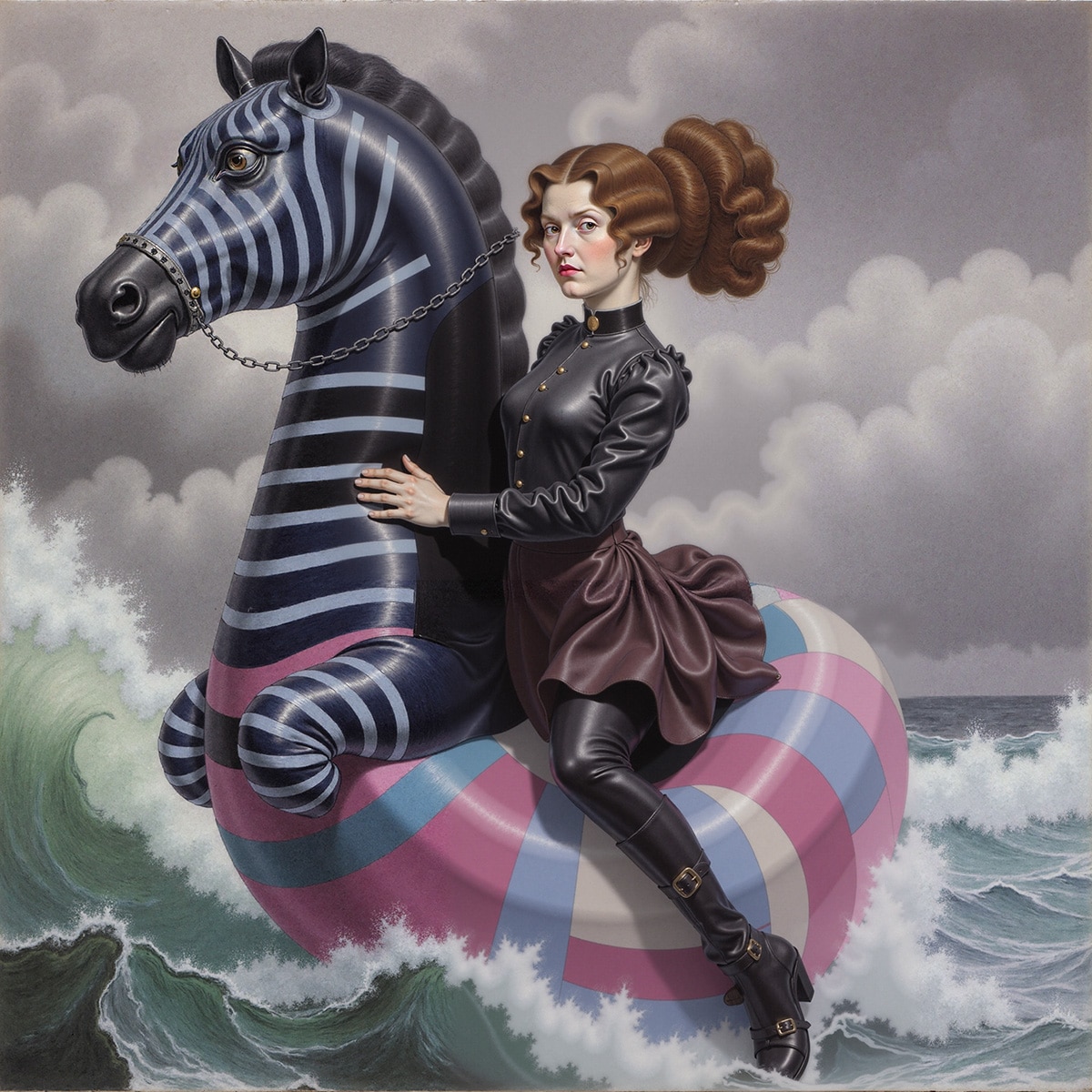
How do you choose which elements of the past bring into the present in your art? The selection of historical elements in my work is an intuitive process, but always conscious. I am attracted by the moments of art history in which an aesthetic or an idea is They were in the process of transformation, when an artistic movement was about to evolve into something new. The Flemish school, Romanticism and the abstraction of the early twentieth century are constant references to me, not as models to be replicated, but as sources to be filtered through my language, weaving them with contemporary themes.
How did you merge classical painting with artificial intelligence? My hybrid approach stems from the need to overcome the limits of traditional painting without betraying its history and language. I started by studying the classic techniques of oil painting, deepening the Renaissance methods and the system of the atelier, but at the same time I was always fascinated by the possibilities offered by technology. Artificial intelligence and diffusion models allow me to experiment quickly and explore new forms, not as substitutes for painting, but as tools to expand the creative process. In the end, this use of the iconic art is a kind of contemporary version of the Renaissance sketch. A decisive moment in this evolution was the transition from the reinterpretation of historical compositions to the creation of completely new works, free from direct references.
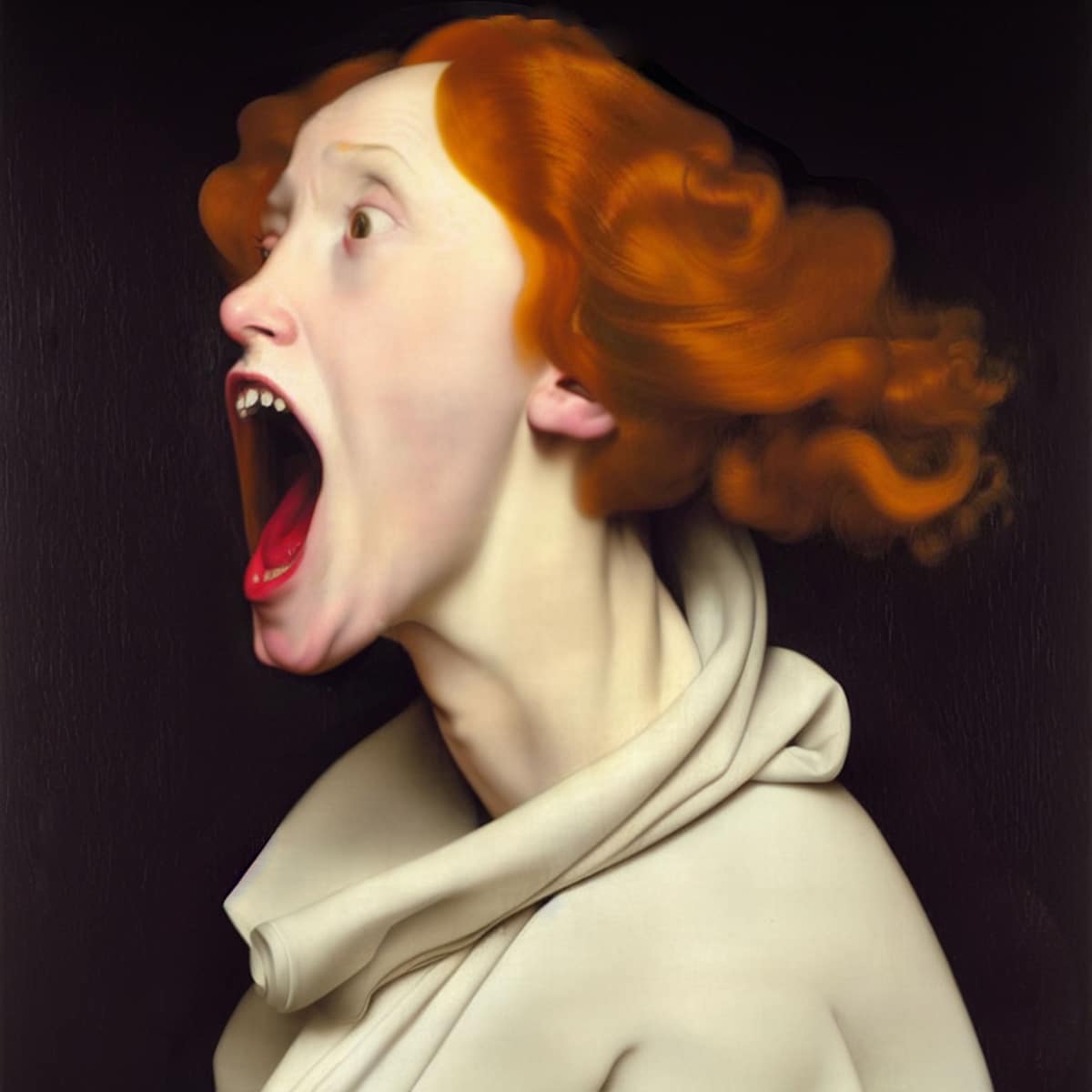
Your artistic research could be called syncretic, right? I like it. I definitely think that history is not a linear process, but cyclical. The great questions of the past are still extremely topical, and I re-elaborate them to create a dialogue between different ages. My works suggest that the past is not a distant and immutable entity, but a living element that continues to shape and influence our present.
The art generated by artificial intelligence raises questions about authorship and creativity. What is your point of view? Artificial intelligence and algorithmic art question the traditional notions of authorship, but I believe that today the role of the artist is more essential than ever. There is a false perception that the iconic art creates images autonomously, when in reality it requires direction, selection and refining. My process is deeply crafted: I train models, create and modify datasets, I guide the output of iconic art and translate it into a physical work.
If ever, the artist is not only a creator, but also a curator, a publisher, an orchestrator of possibilities. In this new paradigm, the artist is not only a creator, a publisher, an orchestrator of possibilities. In the era of machine learning, the artist's task is to maintain the human touch, infuse intentionality, interpretation and emotion into what otherwise would be just an algorithmic expression.
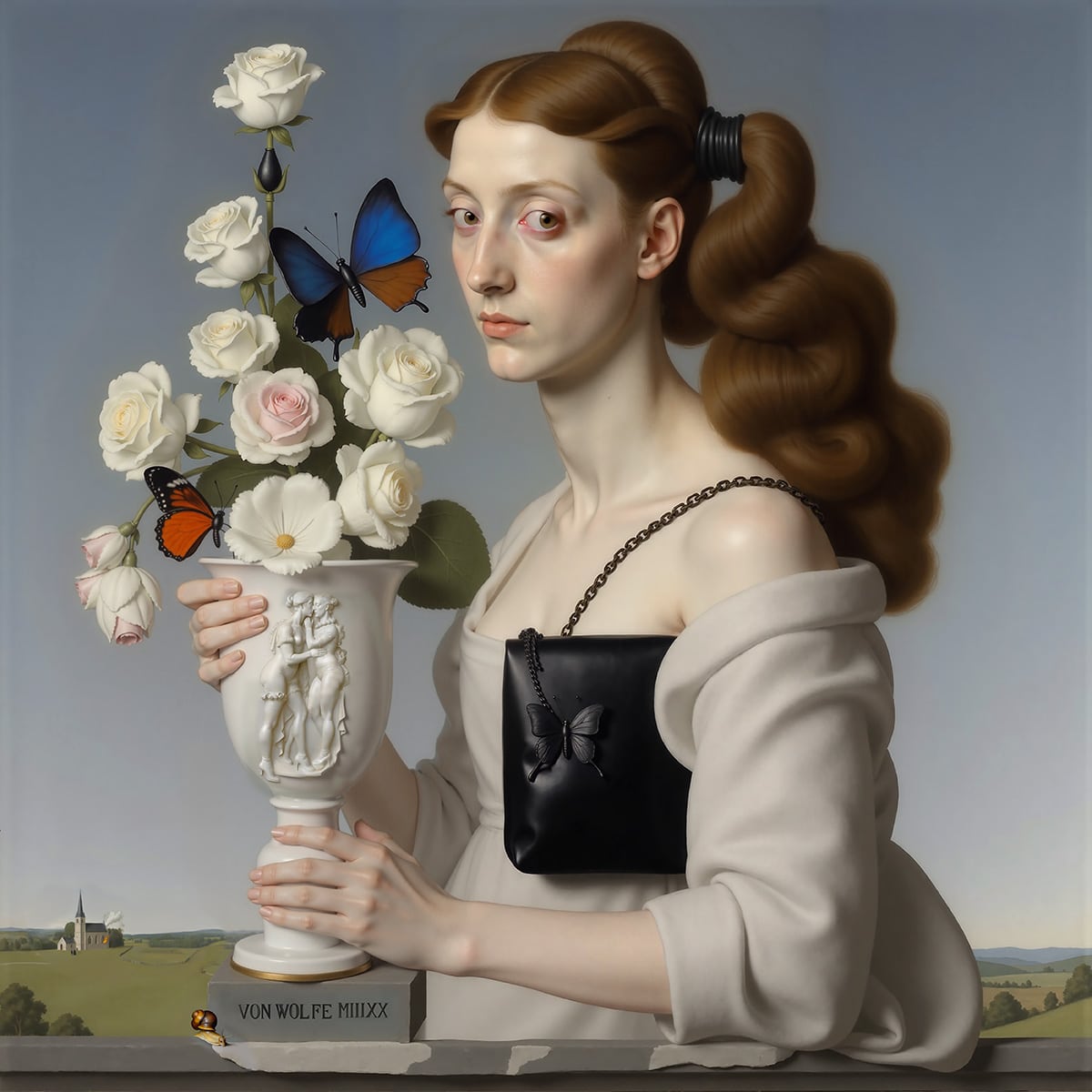
**Your works seem to be visual palimpsests, where images and meanings are stratified.How can you balance order and chaos in your compositions?**The balance between chaos and order is a fundamental component of my works. I often consider them a sort of visual archaeology, in which layers of meaning accumulate, overlap and sometimes contradict each other. This stratified effect comes from both my creative process and from the themes that I face. The elements generated by the script are a dose of unpredictableness, almost like an uncontrolled and crude unconscious, while my task, as a painter, is to refine, remove and highlight. The result is a controlled chaos of works that seem to develop organically over time, as if they brought within themselves a history. This tension between structure and disorder is what gives energy to my paintings, preventing them from appearing either too rigid or too chaotic.
What role does ambiguity play in your artistic language? Ambiguity is a central element of my work because it forces the public to interact, to ask questions rather than receive immediate answers. My works often contain elements that seem familiar, but that are distorted, subverted or reinvented, creating a visual tension. The figures may appear powerful and vulnerable at the same time, beautiful but also disturbing.
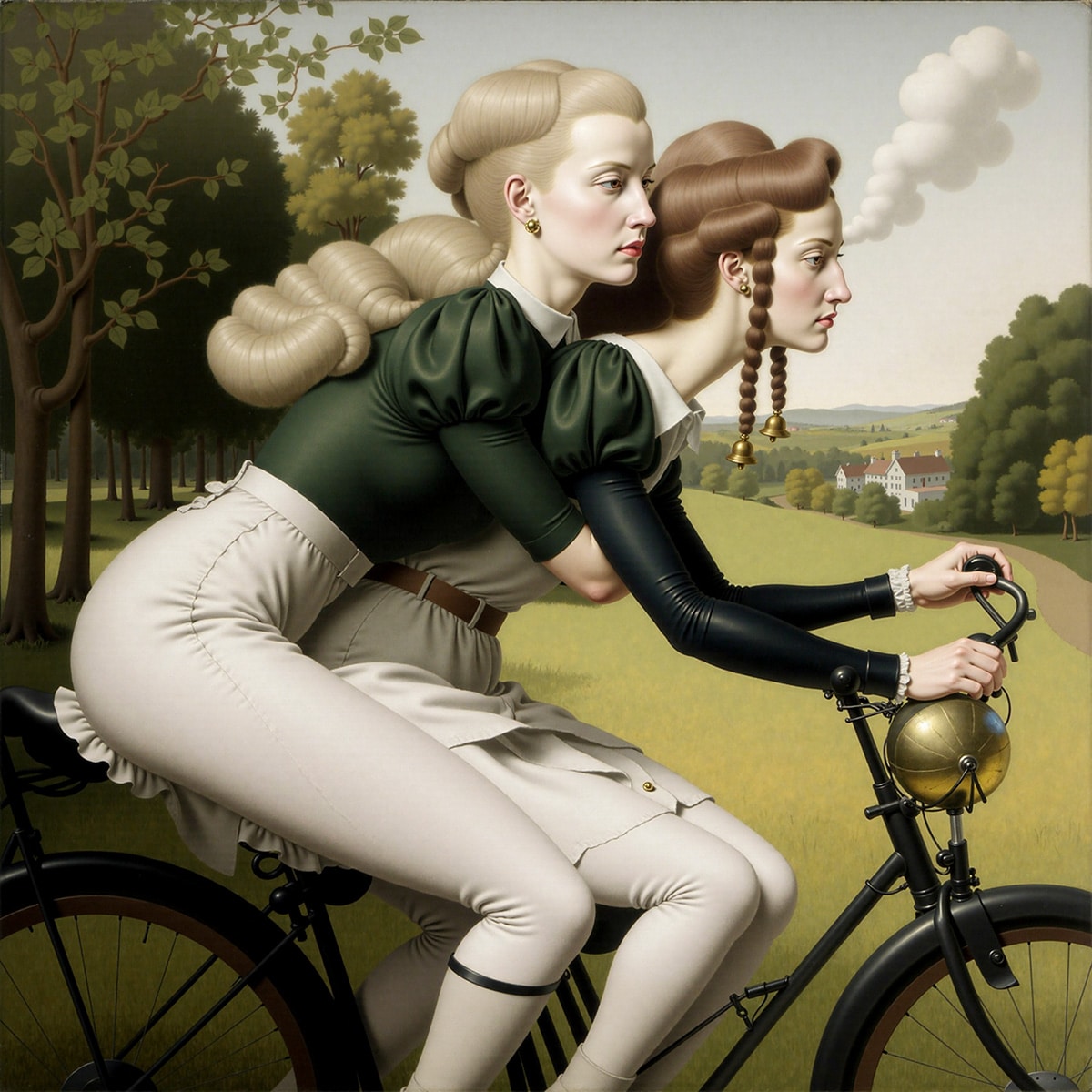
Do you like to be misunderstood? Identity, in particular, is a concept that I prefer to leave open. Rather than offering a unique representation, I let emerge multiplicity and contradiction. My goal is not to impose a meaning, but to create an interpretative space for the spectator. Leaving some unresolved things, I favour a dialogue between the work and those who observe it, transforming it into an active participant in the artistic process.
How can you imagine in ten years? I am particularly fascinated by the potential of artificial intelligence in three-dimensional contexts, augmented reality and the development of new physical materials capable of bridging the gap between digital and traditional media. Painting itself could be transformed, not so much in style, but in the way it is perceived and experienced. I imagine works that exist simultaneously as physical objects and as immersive and interactive experiences. From a historical point of view, I am interested in transition periods that are moments when one way of seeing the world has left room for another. The digital era is one of these crucial hubs, and my goal is to explore how painting can maintain its vitality in this new reality. The tension between tradition and innovation is what I am most excited about, and it is precisely on this intersection that I see my work developing.
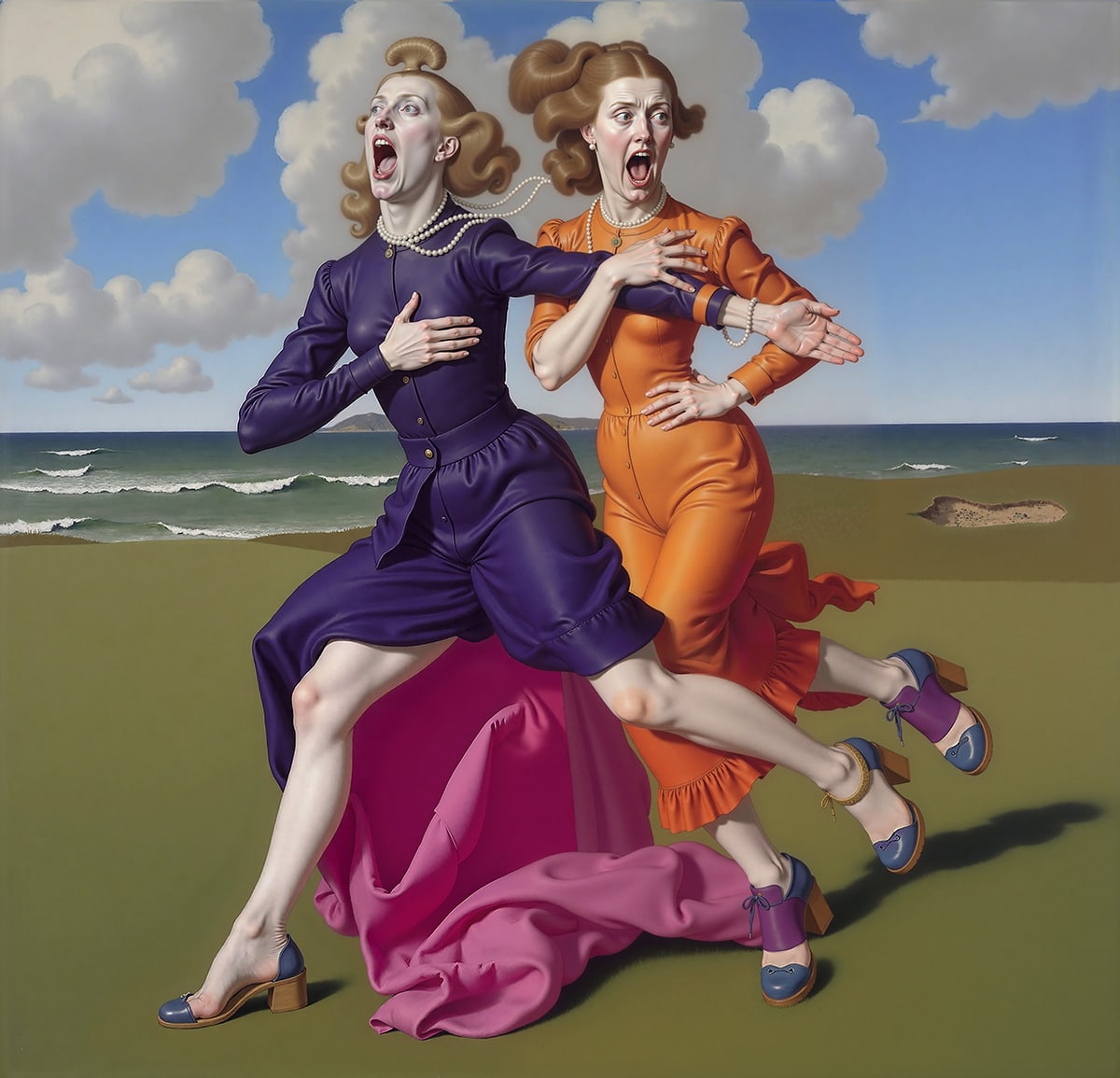
The interview with Wolfe von Lenkiewicz marks the first stage of L'ARTE IN FIRST PERSON, a project promoted by Cramum together with Schiavi SpA, under the artistic direction of Sabino Maria Frassà.
To view videos, enable external content in your cookie preferences.