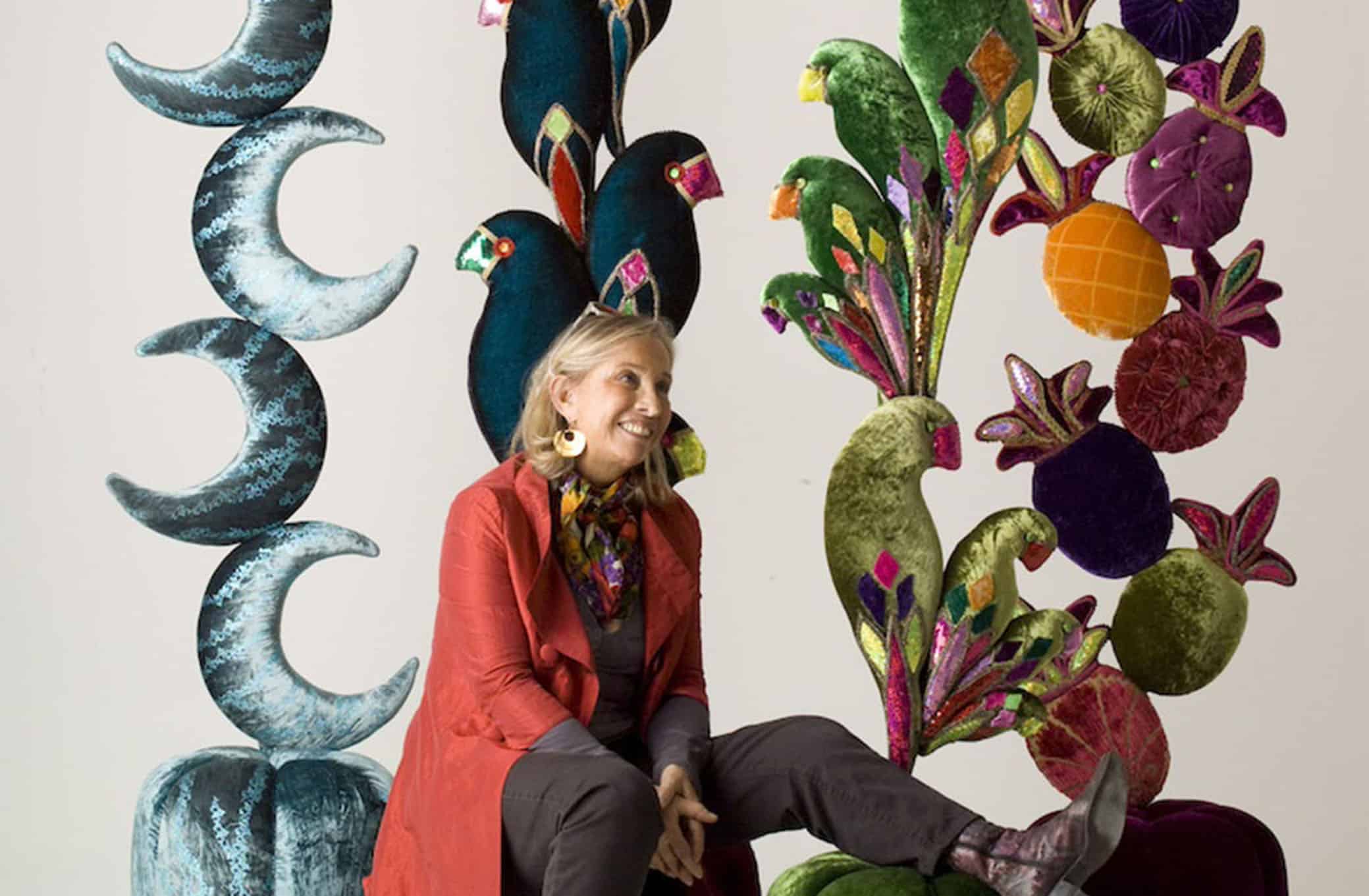
For thirty years, Carla Ptolemy's chairs have not limited to exist: they transform. They are not objects, but passages . from what has been discarded to what comes back to life, from a lost function to an unexpected form, suspended between painting, sculpture and design. On the occasion of this goal, we celebrate with a long interview-story, a language that, over time, has been able to assert itself as one of the most recognizable and at the same time unclassifiable of the contemporary scene. A work that transcends every disciplinary definition to make poetic gesture and vision: a way of looking at reality not to describe it, but to transform it.
At the base, a conviction as simple as radical: nothing is ever only what appears. Even what seems marginal, incomplete or forgotten can reveal an unexpected possibility of beauty. It is from this tension that the chairs-sculpture of Ptolemy are born: wounded objects, abandoned, returned to a new life through a process that is both intimate and visionary. Rather than reinventing reality, Ptolemy crosses it and folds it back every time lighter, more alive, more free. And this conversation is from here that begins: from thirty years of chairs, of course, but above all from an obstinate and poetic idea of transformation through art and creative thinking.
Sabino Maria Frassà
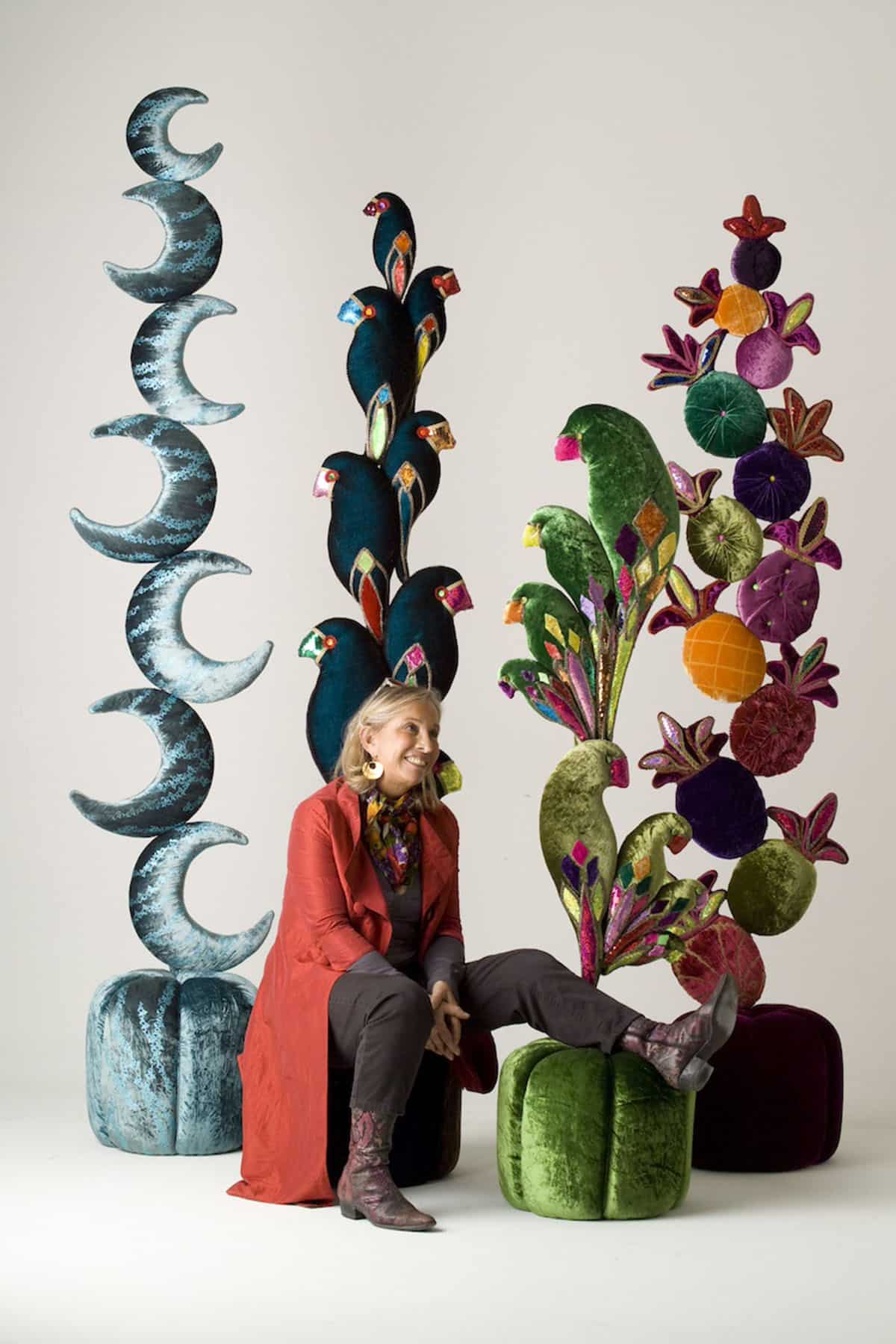
For thirty years you have been the lady of chairs. But what do your chairs really tell? The key word is transformation. Since 1996 I have always started from an abandoned object, from a session that consumer society has discarded, to restore a new life. Because transformation is part of our existence: it is often painful, sometimes traumatic, but necessary. And above all it is up to us to try to transform also what in life appears ugly or hurt into something beautiful. This awareness came at a very difficult moment in my life: I had a depressed mother, I had given up my career for the family, and it was precisely that fracture that became a turning point. Since then everything began from an object found, almost always of recovery: a session that I collect, I observe, listen, and from which I start to imagine a metamorphosis. In Pinerolo I had a attic full of broken chairs, those family chairs that lack a piece of the shoulder or a kinched leg. They were objects already loaded with memory, apparently finished. But it was from there that everything began.
You have often spoken of a true philosophy of the chair. Yes, because things must not be endured: they must be changed, in doing and not just in thinking. Because a chair is never just a chair; and, in the end, nothing is ever simply what it seems in life. It must be understood that reality is often cruel and it is up to us to try to fold it, to make it better.
After all, yours seems like a job that does not represent reality, but dreams of it. It is not a matter of denying reality, but of transforming it into something that lightens it, that takes it away from the heaviness, the boredom of everyday life. I make people dream with their eyes open, because life must be lived, not only thought.
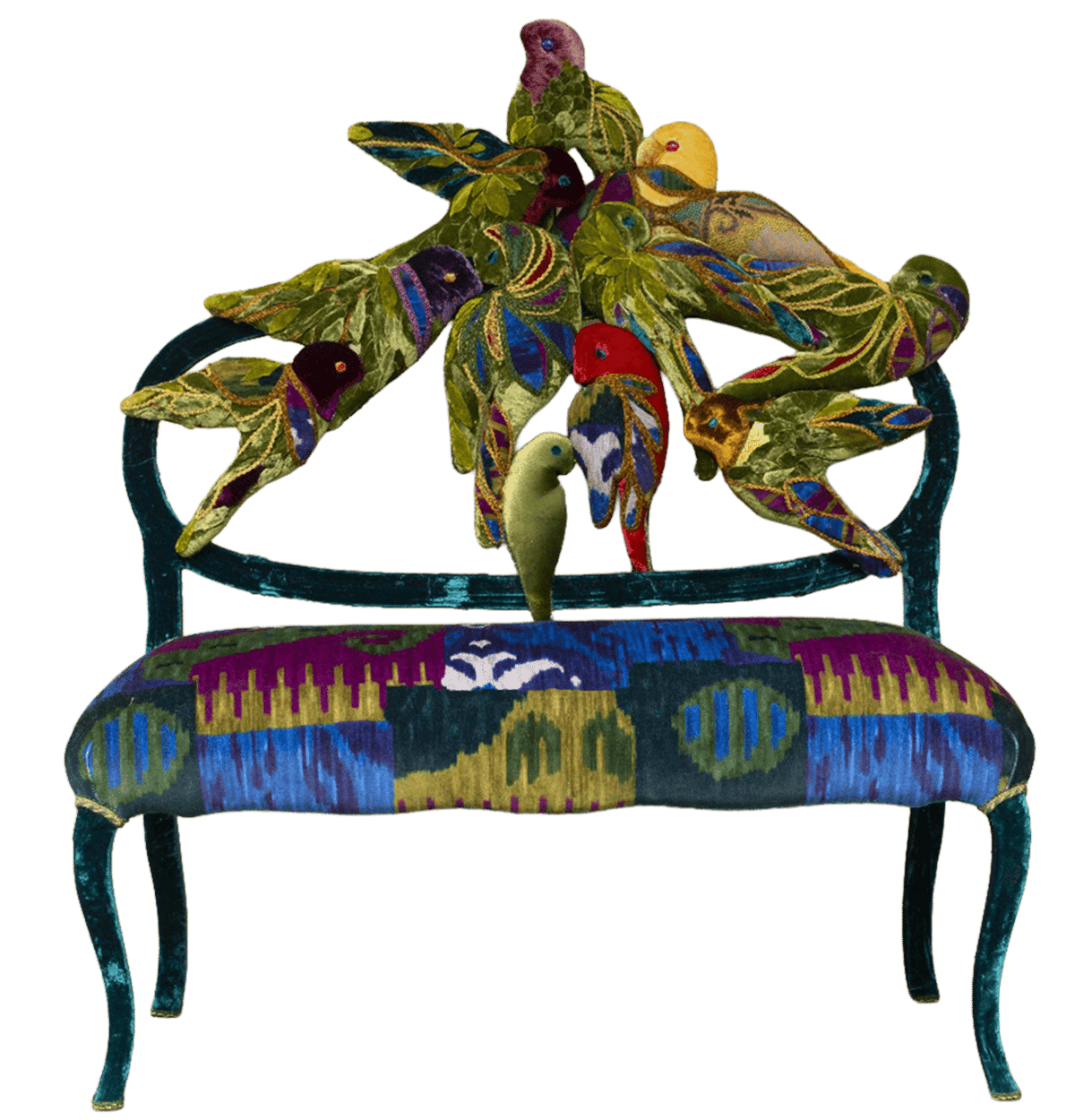
What was the first form you changed your reality with? The first form was a dolphin, perhaps also because I am of the sign of Pisces. I immediately take the general structure; then the details can change during the work. At that point the color enters the scene. I hide painter and I continue to feel like such: the fabric, for me, is a palette. Maybe that's why I never had a real relationship with black. When I intuition the whole, then I really start working. In time, then, other forms have arrived: parrots
Without drawing, how do you understand colors, sizes and proportions? I feel them. It is difficult to explain it differently. I feel them, it is an instinct. Even in painting I have always worked this way. I painted alongside great painters who welcomed me in their studies: there are those who work in jet and those who build everything from a perfect design, prepared in advance. I belong to the first. The work finds its proportions alone. It is created by itself.
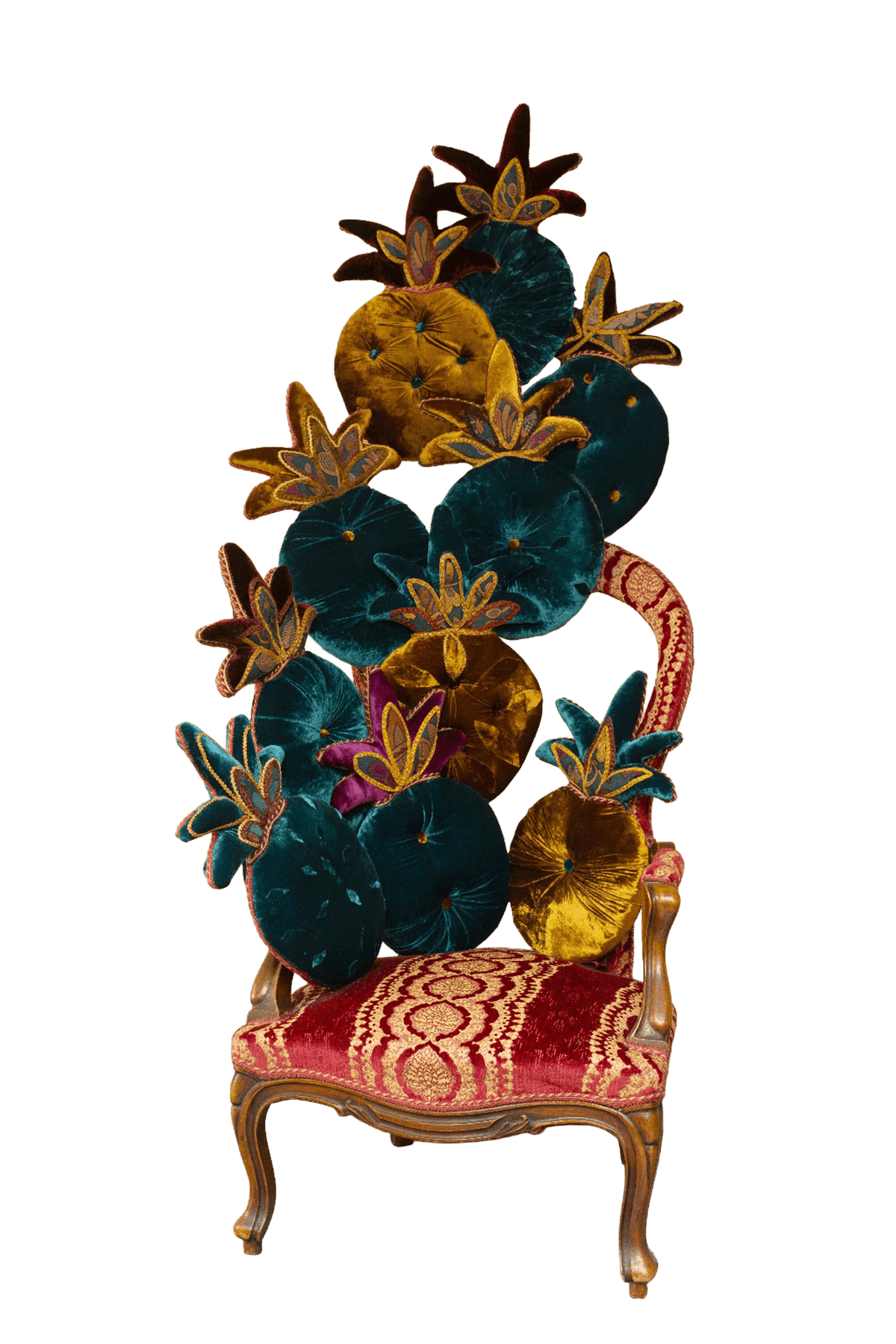
You rarely mix shapes. If you make pineapples, they are pineapples; if you make parrots, they are parrots. You do not love I love the fruit salad, but not in the chairs. Inside me there is something that doesn't sound good when I put together too many different things. Sometimes I put a moon in the middle of turtles, this yes. But in general I feel the need for every job to maintain its internal consistency. It's not that every chair should be dedicated to something specific: it's rather a matter of harmony. I feel when something works and when it becomes miscellanea, and then it doesn't convince me anymore.
And yet this language continues to evolve. At first you didn't think it would last that long. No, not at all. I had begun to believe that it was something passing, almost a phenomenon of six months, destined to run out quickly. Instead, it continued to grow, to transform, to ask me every time something new. At first I had to arrange. In time, however, I learned to look better, not to stop at the dealer, to go directly to the manufacturer. For some fabrics, for example, I go to Bevilacqua, Venice, and I drive them crazy, because I get myself out of an infinite number of champions.
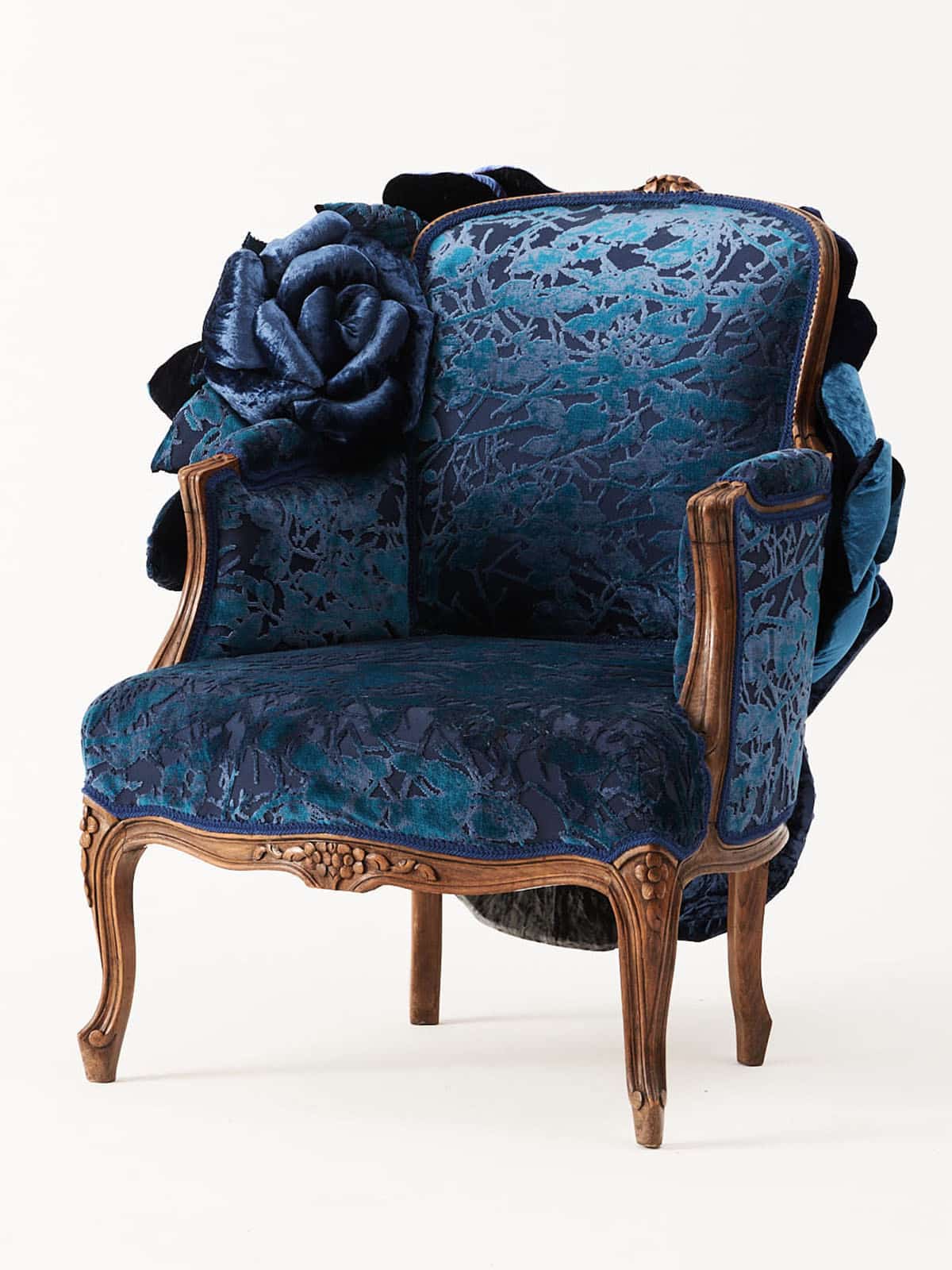
Roses have become almost iconic. Yet you told me something amazing: they are not among your most loved forms. It is true. Roses are very successful, but I don't love them so much. Because at the end of the day the rose remains a rose: the transformation there is minimal. It is above all an aesthetic fact. Unless something else happens. For example, the pouf all covered with roses: that I love very much, because there the transformation is real. A round shape becomes even more round, almost exasperated, because of all those round roses that cover it. Before the roses, however, a gardenia has arrived, wanted by Franco Maria Ricci.
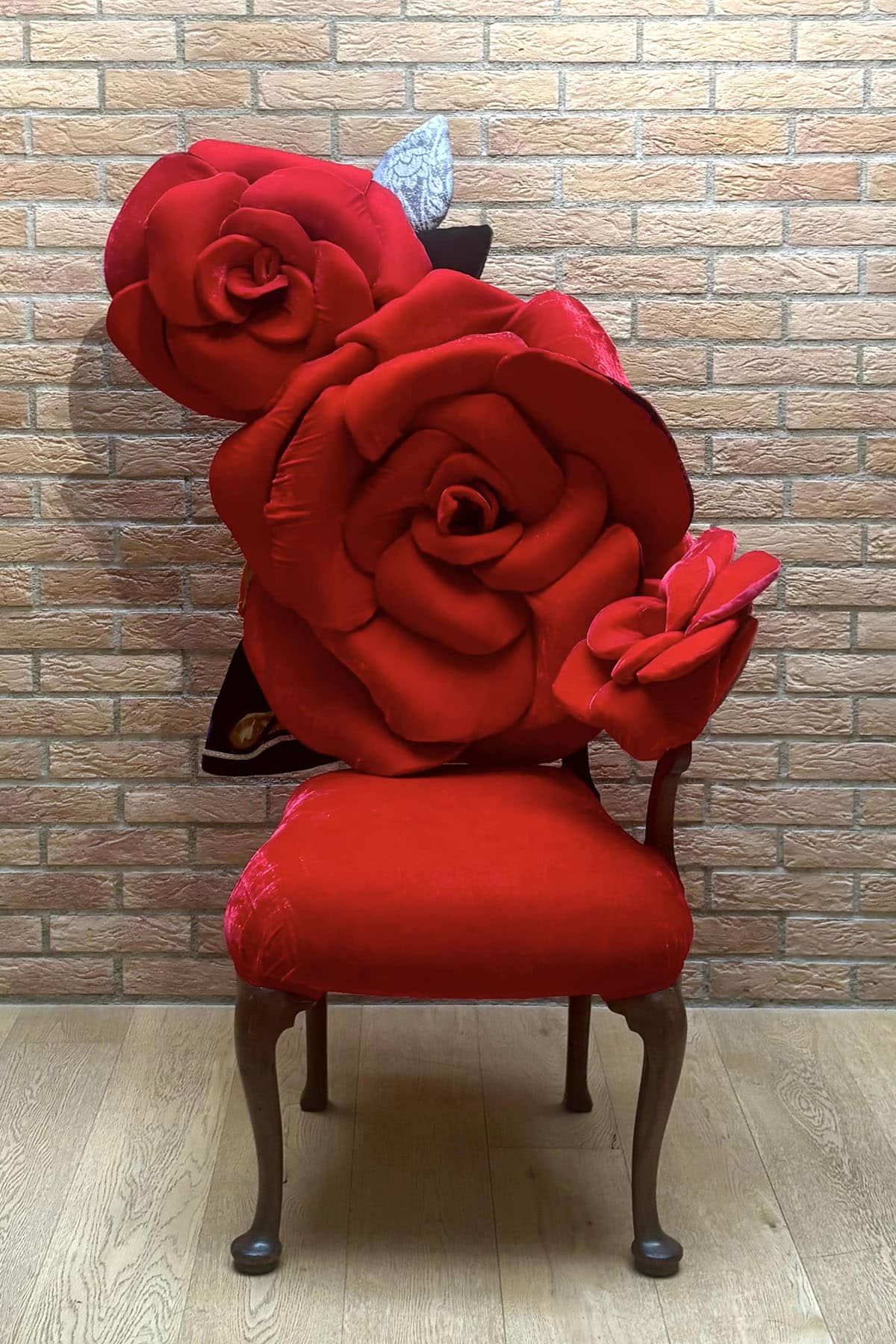
Do you ever have second thoughts in progress? I can put a chair together, look at it and see it immediately that it is not going. Then I take everything apart. But even the form is never completely definitive: there are days when something convinces me, and the next day I don't anymore. The matter and I think: ♪No, so it doesn't go. I come back very often on the works, I make many changes in the course of the work. The general structure I see immediately, on that one I usually have no doubt. But the detail must be thought, rethinked, corrected.
There is an element that strikes a lot in your work: it often provokes extreme reactions. Either you love it or you hate it. How do you live this polarization? Over the years I have received much love from the public. Instead, it makes me smile who rejects these works, because often in that refusal there is a difficulty to welcome the new, or to accept a different function of the object. It is a form of mental rigidity: who does not know how to transform with time ends, in some way, to stay old. I would never say "I would not want it even given away" because it is a closure that would make me ashamed. I can say "I don't like" or "I don't fit my idea of art" but I stop there. Also because, in time, the look changes , and what we refuse today, tomorrow could talk to us in another way.
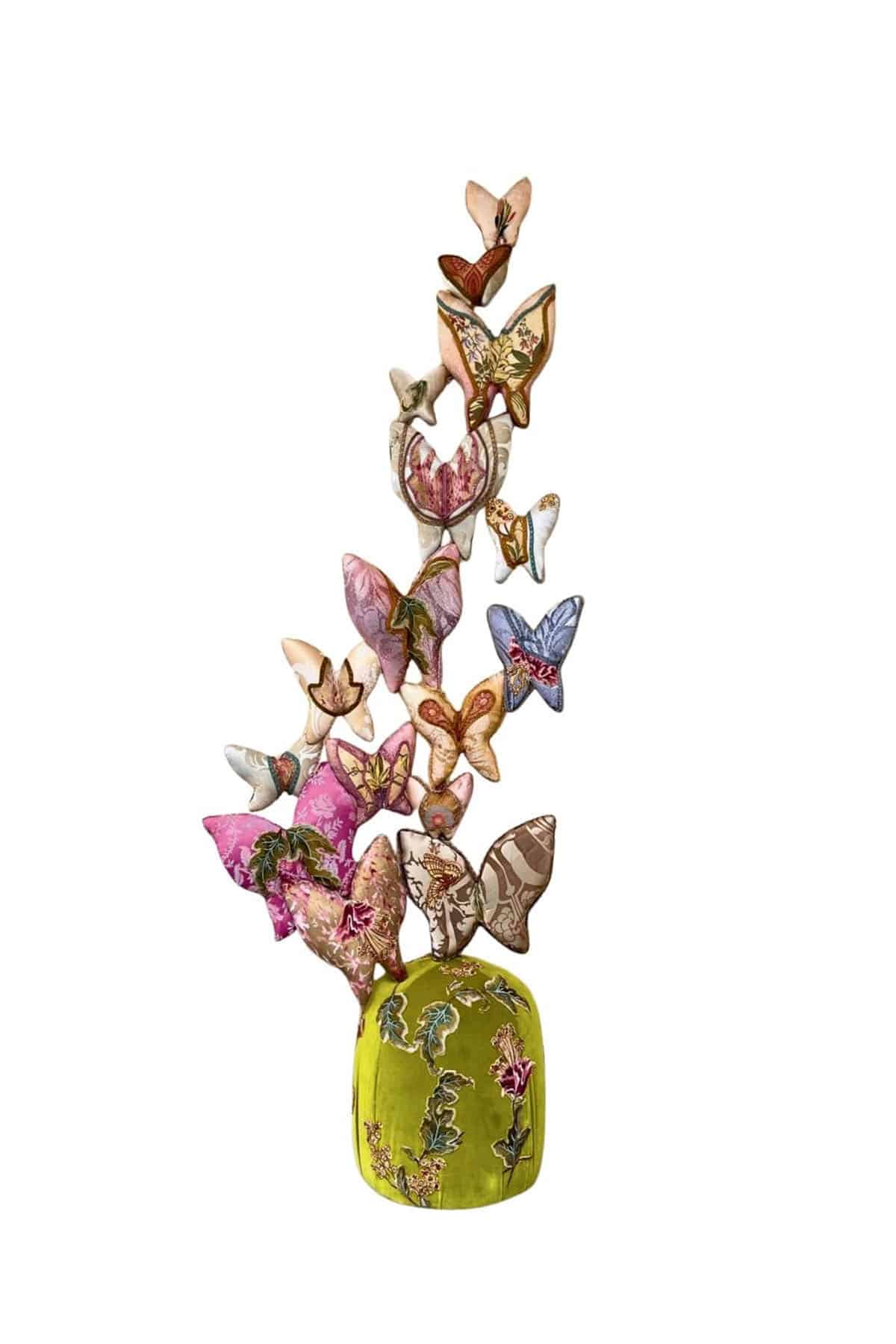
One last question, perhaps the simplest and the most difficult together. Your chairs are sculptural works, but they are also chairs. Do you want people to sit there really? Yes, of course. They must be used. If I wanted to make an object fine to himself, I would make sculpture: I worked marble, I make ceramics. Here instead I want to create something in which one can live, something that can make the one meet happy. Not only contemplation, but experience. If you think about it, the objects were born beautiful, before even the word design existed. The wooden cutlery had beautiful shapes, the terraglia dishes were beautiful, the houses of the Veneto countryside
When patronage makes you fall in love with art: it is born                                                                                                                      Â
Discover the second episode of L'arte in first person: Between mud and steel → Leo Orta's art beyond the design border
To view videos, enable external content in your cookie preferences.