June 2026 • L'ARTE IN FIRST PERSON
Sabino Maria Fressà per Cramum & Schiavi S.P.A.
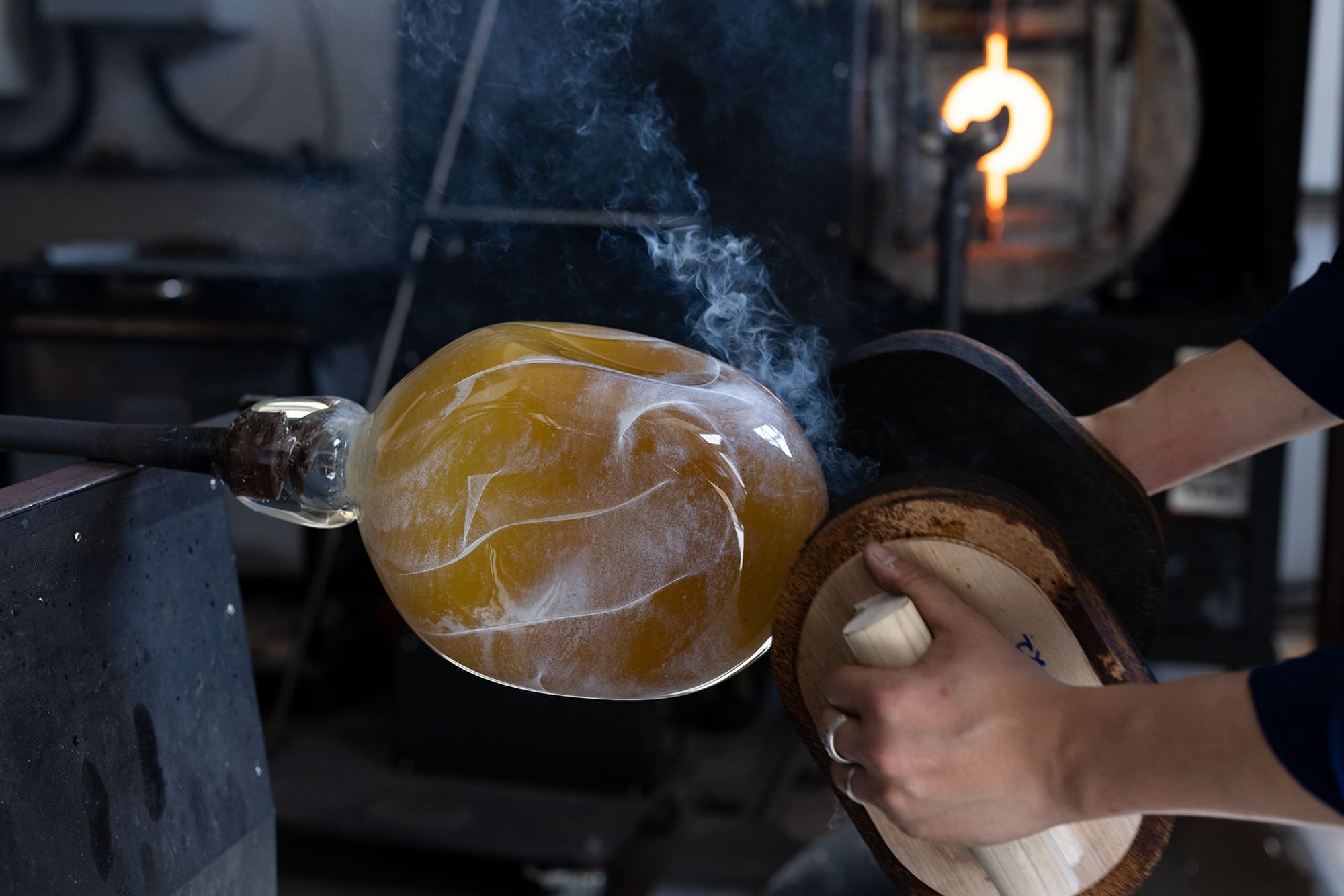
** Glass is never just a material. It is a memory that takes shape, it is tradition, it is a threshold between what resists and what can break. For Liu Chien-Kuang, glass has become a language through which to understand the world and tell itself.** Born in Taiwan in 1988, Liu Chien-Kuang found in glass the ideal means not only to explore the relationship between craftsmanship, technology and identity, but to give voice to a personal and cultural experience suspended between East and West. His practice stems from the encounter between the tradition of blown glass and the most advanced digital techniques → from 3D printing to computerized carving → In a path that reflects an idea of art in continuous evolution, able to dialogue with history without being imprisoned. In his work, matter becomes a vehicle of memory. Liu observes and studies historical objects and handicrafts, often preserved in museums, and then reinterprets them in a contemporary key. This translation process is rooted in his personal experience: childhood spent in a family of craftsmen, early contact with the places of production, the transfer to Europe and the consequent rediscovery of his origins through artistic activity.
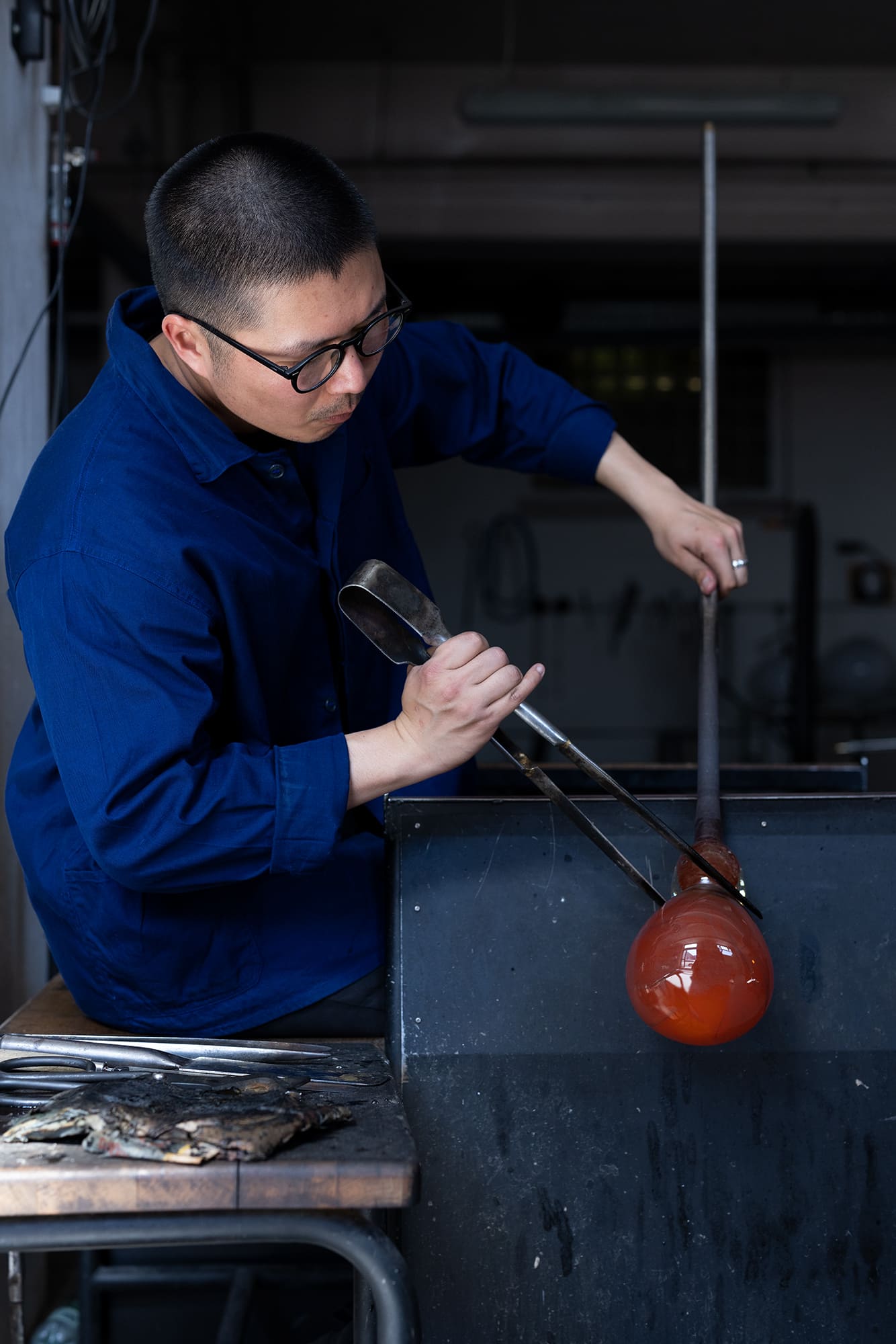
Glass, in its research, is never a simple formal support, but a means of mediation between cultures, times and different materials. Each work is born from a delicate balance between technique and experimentation, where error and unexpected are not obstacles to avoid, but possibilities to welcome. Liu is not the guardian of an immutable tradition, but as an explorer of a continuous dialogue between manual processing and technological innovation. Living and working today in Europe has made this dimension even more evident. His works bring with them the tensions and transformations of contemporary identity, restoring to the viewer the complexity of cultural exchanges and the beauty of changes over time. In this sense, his work dwells in a liminal territory between art and design, understood not as separate categories, but as a fluid process of research and choice. In this interview, Liu Chien-Kuang tells first-hand about his artistic journey, his relationship with matter and technique, and the way in which glass has become for him an instrument to interrogate the past, the present and our way of inhabiting the world. This dialogue with memory, transformation and subject matter will continue in the next personal exhibition Ethereal Geology, from Spazio Nobile, in Brussels, from 20 November 2026 to 17 January 2027.
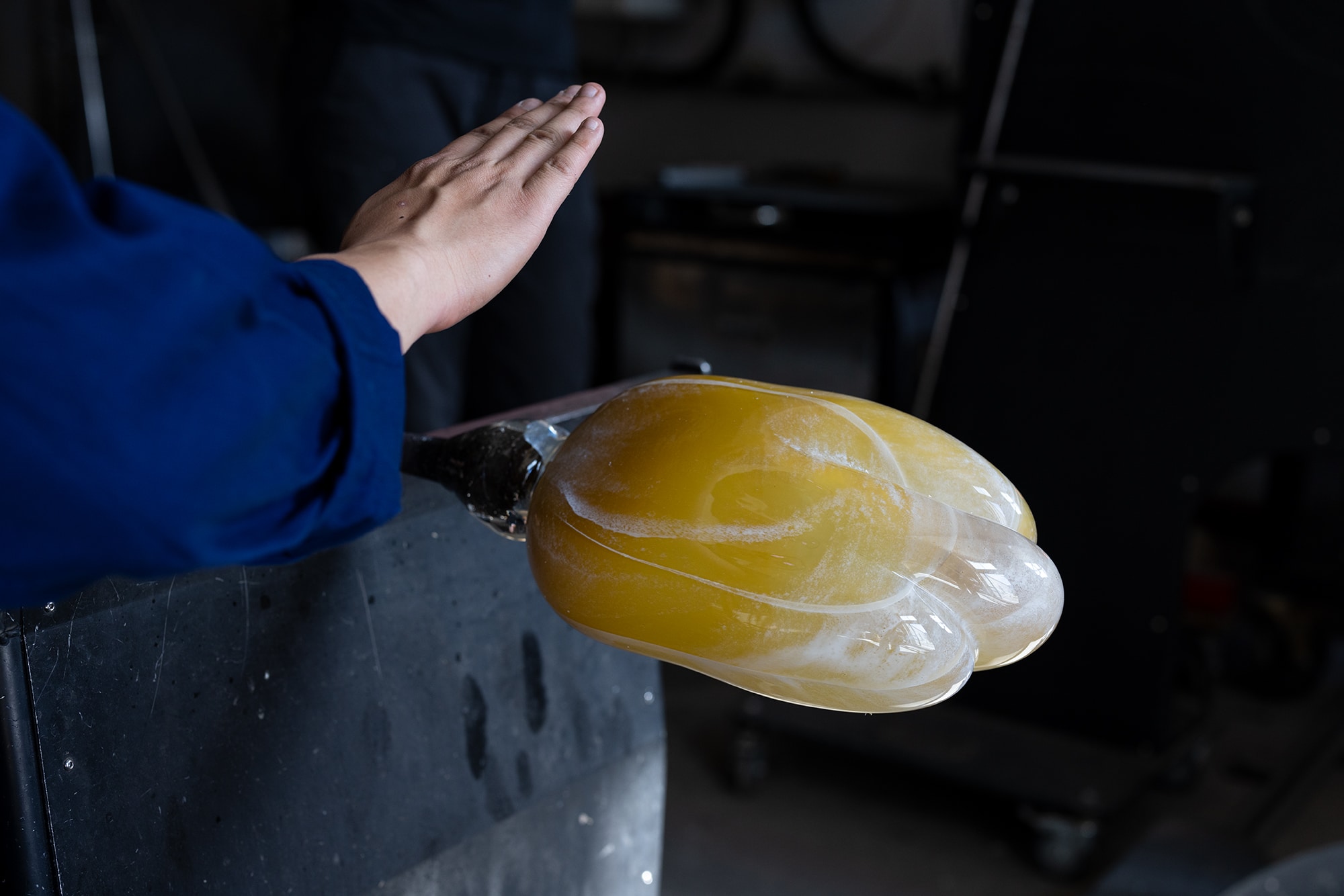
How did you get to glass, which is perhaps the most important matter that identifies your art? I came into contact with glass while studying ceramics in college in Taiwan. Glass blowing is a lively art and, compared to ceramic creation, which takes place mainly in solitude, is much more engaging because it is a team process. When I started studying glass processing, channels to get information were relatively limited. I was thrilled to start looking for knowledge about glass from around the world through the Internet. At that moment, glass became the means through which I began not only to make art, but also to understand the world. Glass was the opportunity and the tool to know the world: looking for information on various platforms, I also connected with the cultures and languages of different countries. Glass materials have led me to travel all over the world, from Asia to Europe and America. Every place I have been has a unique glass industry, which deserves to be explored and studied.
The master of Italian glass Laura de Santillana said that she thought in glass ": does it happen to you too?" Exactly so. During a visit to the National Museum of Taiwan History, I saw a stone axe of the Stone Age. Looking at its shape and structure, I felt the desire to reinterpret it in the material I know best: glass. For me, glass is like a language through which I can express my ideas. It is a material that can be translated and reinterpreted. When glass interacts with heterogeneous materials, an exotic harmony is created. The concept of exoticism is central to my work, with its many nuances, both positive and negative.
Explain why and how do you interact glass with other materials? In my creations I use different materials, each of which requires tools I have always had the desire to learn new skills to explore various expressive means. I hope to keep this passion for learning new techniques and technologies alive. In my studio I have tools for processing wood and ceramics, different 3D printers and computerized numerical control machines (CNC). In the future, my goal is to buy a robotic arm and learn how to program software for artistic production. I believe that continuous learning enriches my creative practice.
Art, technology and technique: do you consider yourself an artist 'homo faber Â"? I grew up in a family where it was normal to create objects with your own hands, and my hometown is an international port with an export and processing area. Therefore, the children of my generation have developed, to a greater or lesser extent, allergies and respiratory problems. The industry, materials and production processes flow in my blood.
You mean that your art is autobiographical? I believe that everyone's art is. My father is a furniture designer, and since I was a child, attending several factories, I developed a natural interest in crafts. I was born in Taiwan in the 1980s, in a period of change and conflict. In those years, the country was coming out of martial law, and prohibitions on political parties and newspapers were gradually revoked. The flow and clash of values continued to influence me. When I create art, I often think of moments of my childhood that seemed normal at the time, but now I find it absurd. These traditions of life, which in the eyes of contemporary European society may appear excessively ritualistic or even superstitious, have nourished my artistic expression.
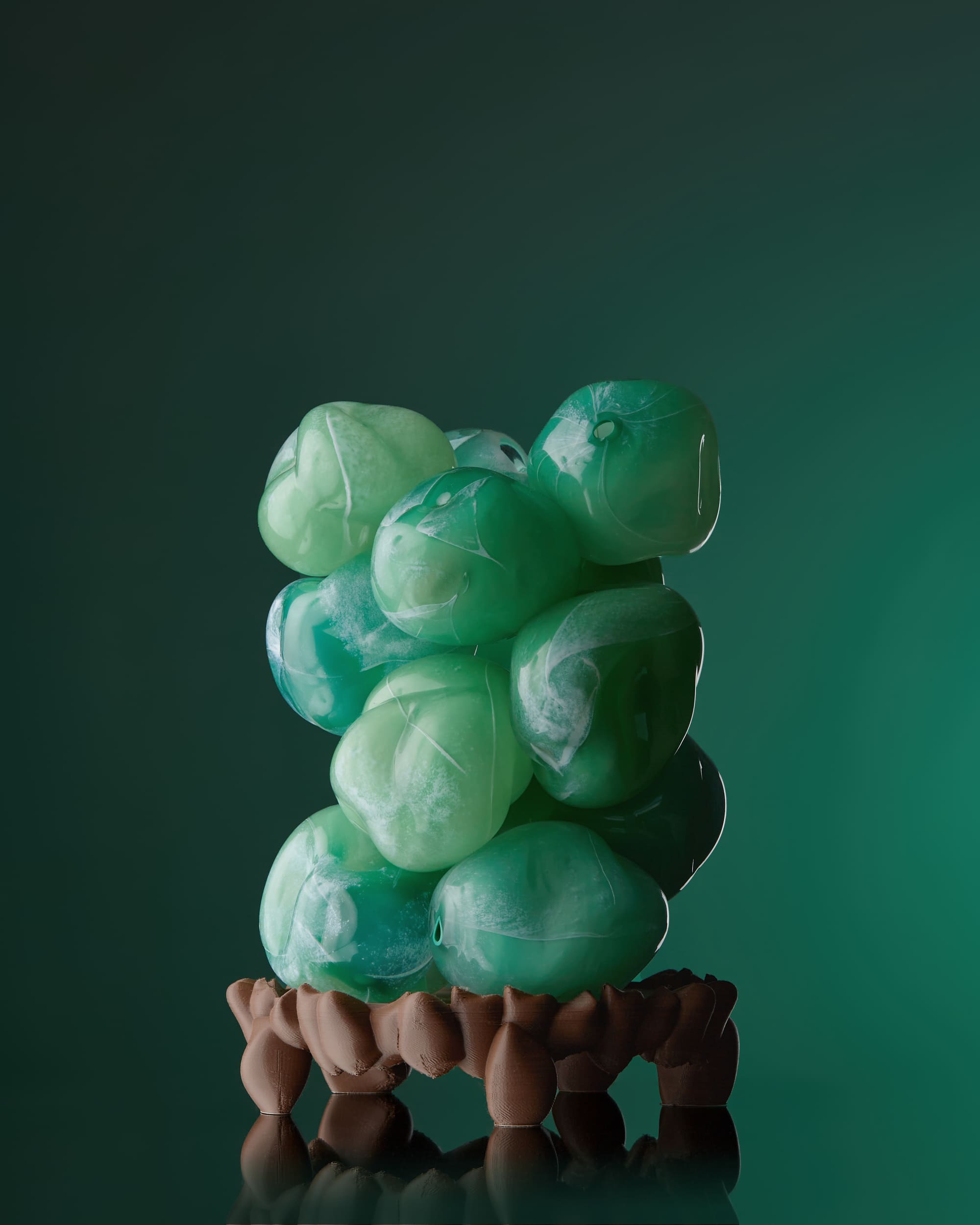
What is your relationship with technical tradition and technique in general? I love visiting history museums and observing the objects on display. I am interested in studying the craft techniques employed in their realization, but also discovering the stories hidden behind them. After the research, I return to the studio and begin to interpret and translate these museum objects into my sculptures, using my sensitivity and my techniques. However, I am not an expert in all methods. As I explore new techniques, mistakes and misunderstandings inevitably occur, due to the limitations of materials and instruments. I accept, and indeed expect, the beauty that comes from these mistakes.
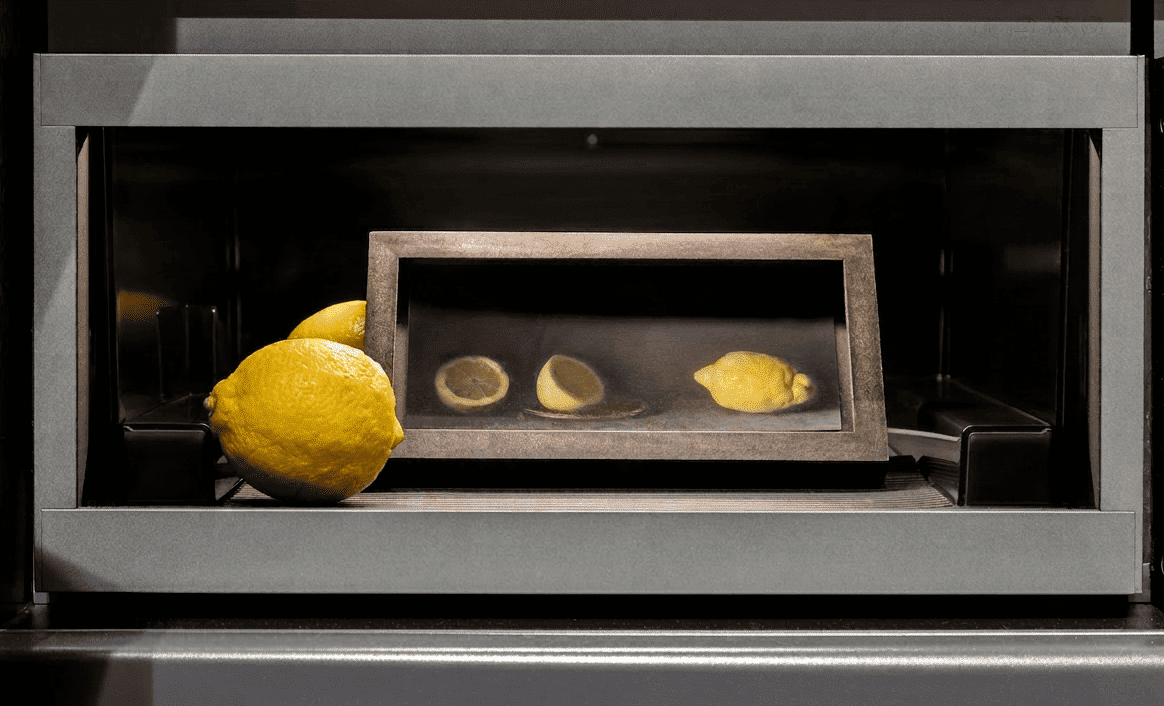
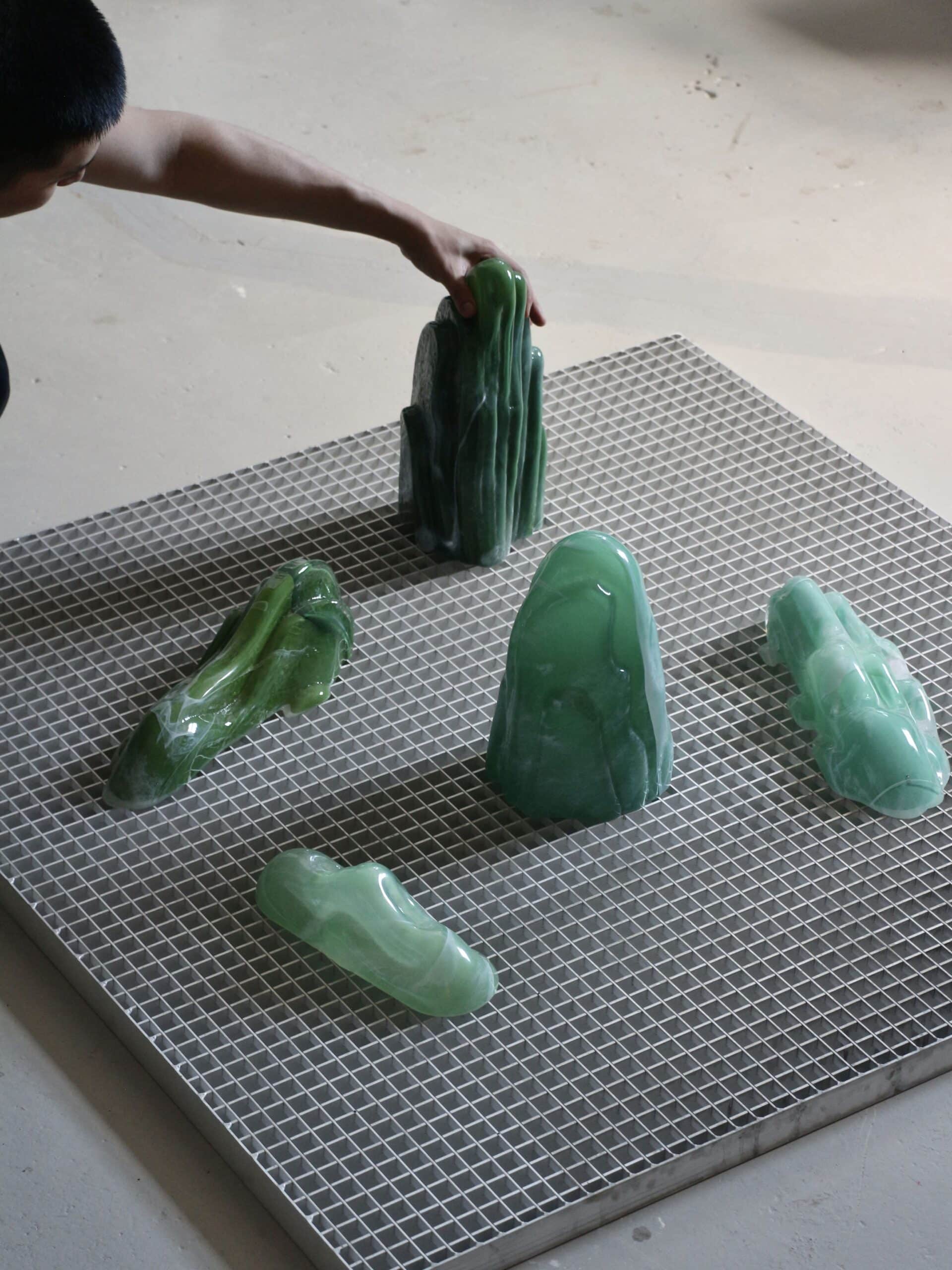
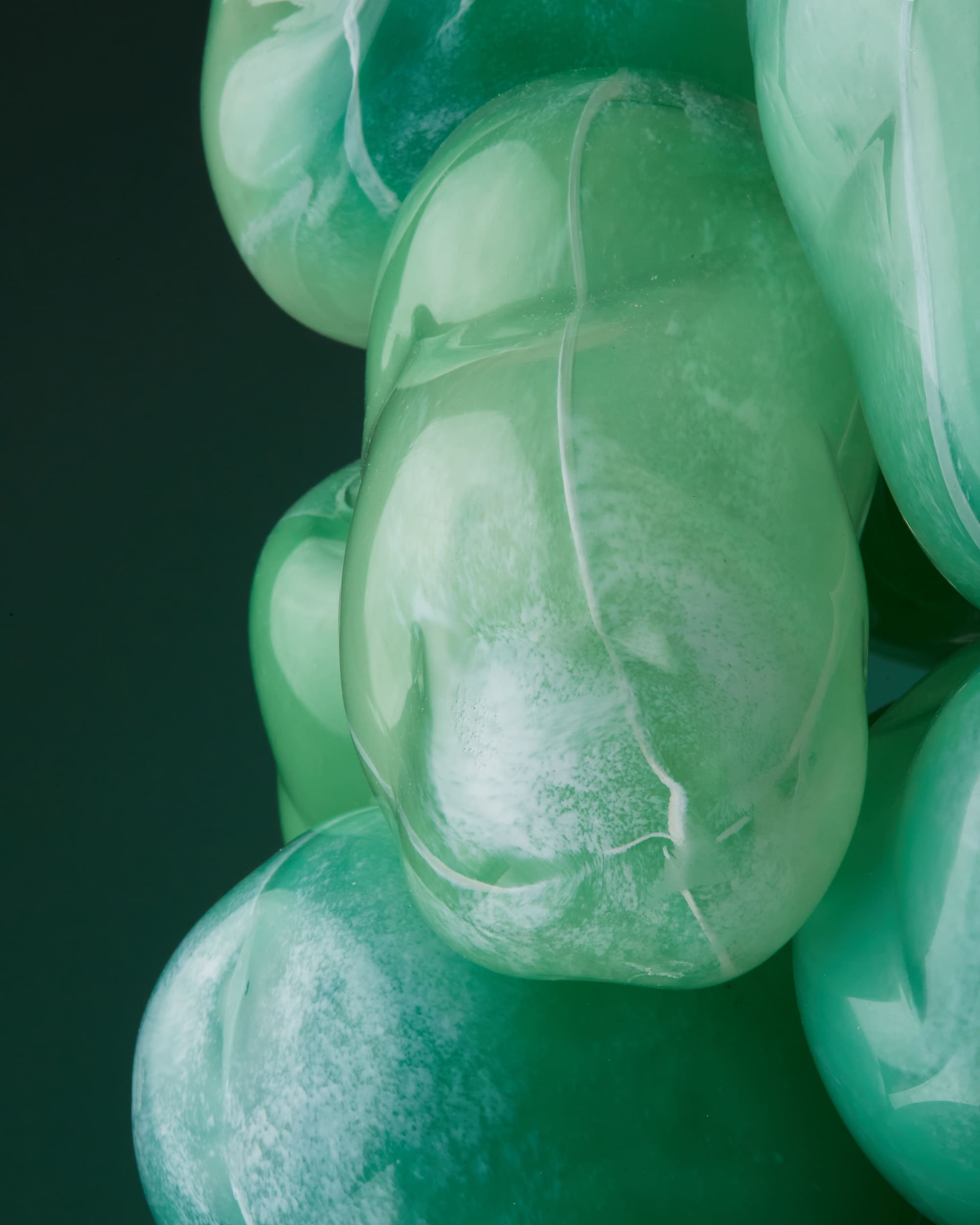
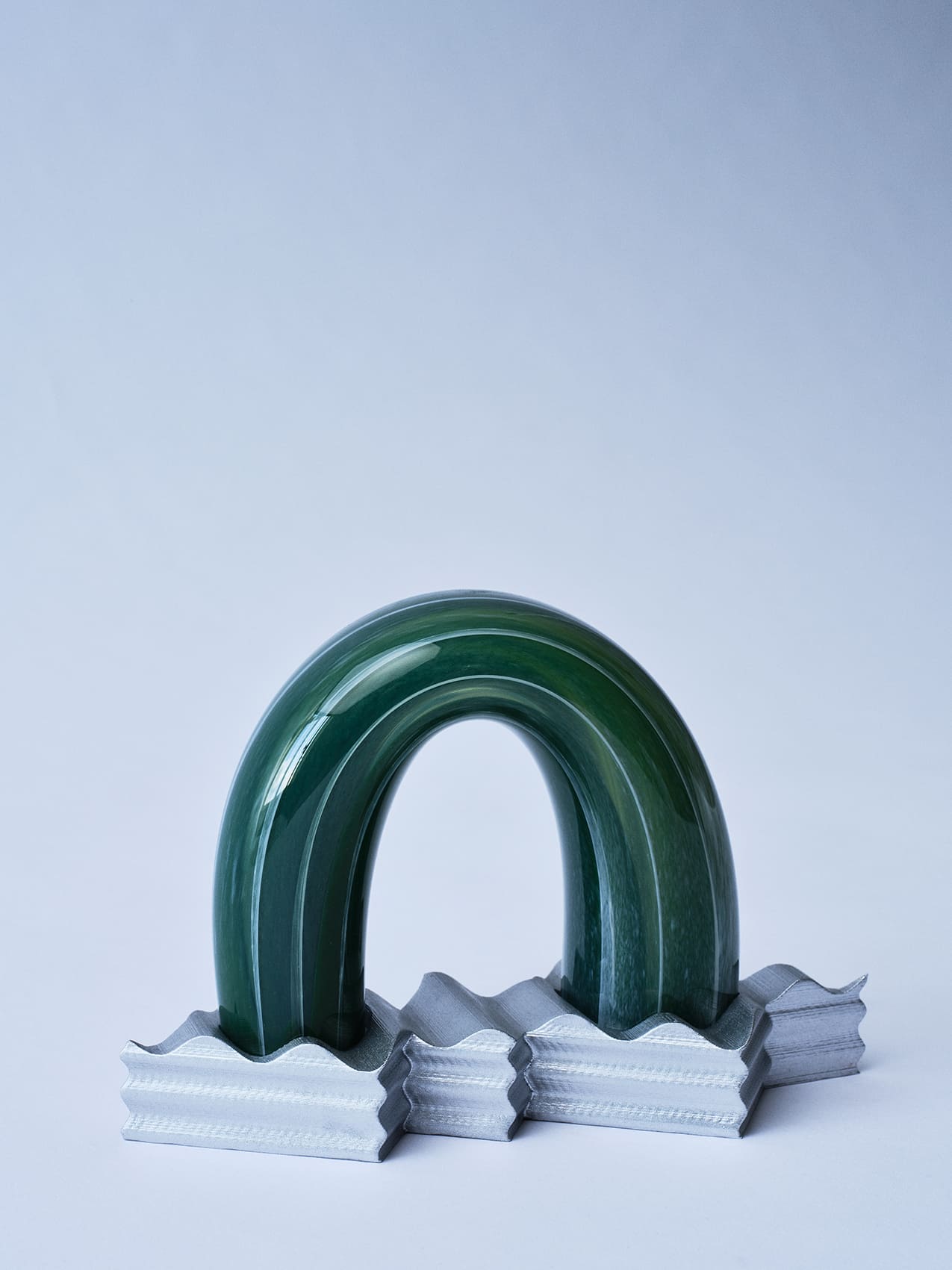
Schiavo della tecnica: do you not risk Mannerism? No, indeed. The important thing is not to repeat, but to go ahead. I do not use the technique of others, I do it mine and so in my own way and in my little one I make it evolve, that is to become something else from the original of the beginning. A concrete example is a project that I have been carrying out for some years. I had the opportunity to visit the collection of Asian glass at theÖstasatiska Museum in Stockholm. I found some glass objects with particular patterns and colors, similar to precious stones. A researcher explained to me that, for a long time, glass was used to imitate jade and other rare stones. For this project, I focused on the use of green glass to reproduce the rarest The support of the precious stones is usually made of rare dark wood; I decided to make it unique by sculpting the pedestal in a digital program and printing it in 3D. I like to play with the contrast between materials and reflect on the ideas of imitation and authenticity. The glass was for me an excellent tool to understand the complex world around us.
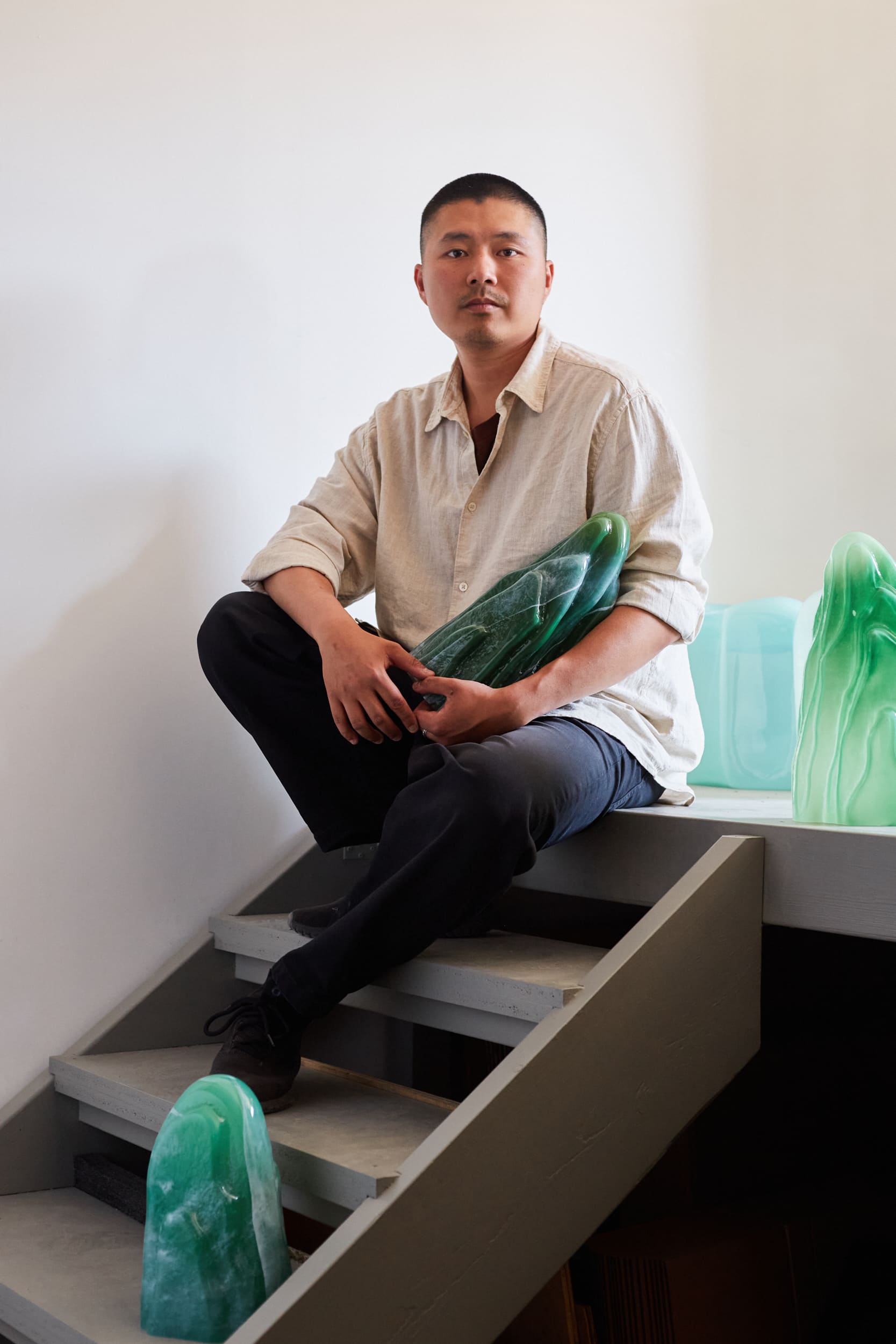
** What are your relations with the past?** Studying historical objects leads me to reflect on the past, my existence and the future. Since I moved to Sweden, people have often asked me about my origins, and this has made me realize my limited knowledge of Taiwan, the country where I grew up. This has led me to want to discover more about the people and events that have marked my homeland, however, I am currently living and working mainly in Europe. When I exhibit my works here, I hope that viewers can perceive the beauty of the changes in identity and cultural exchanges.At the same time, I wish to convey in a poetic way the inner tensions and challenges of living in a different place.
Your work may seem to live on a liminal territory between art and design: is it wrong? I feel like a person constantly moving between art and design. I use art to question myself about society and my very existence, while design helps me find solutions to problems. For me, art and design are not separate categories, but a fluid process in which I move freely.
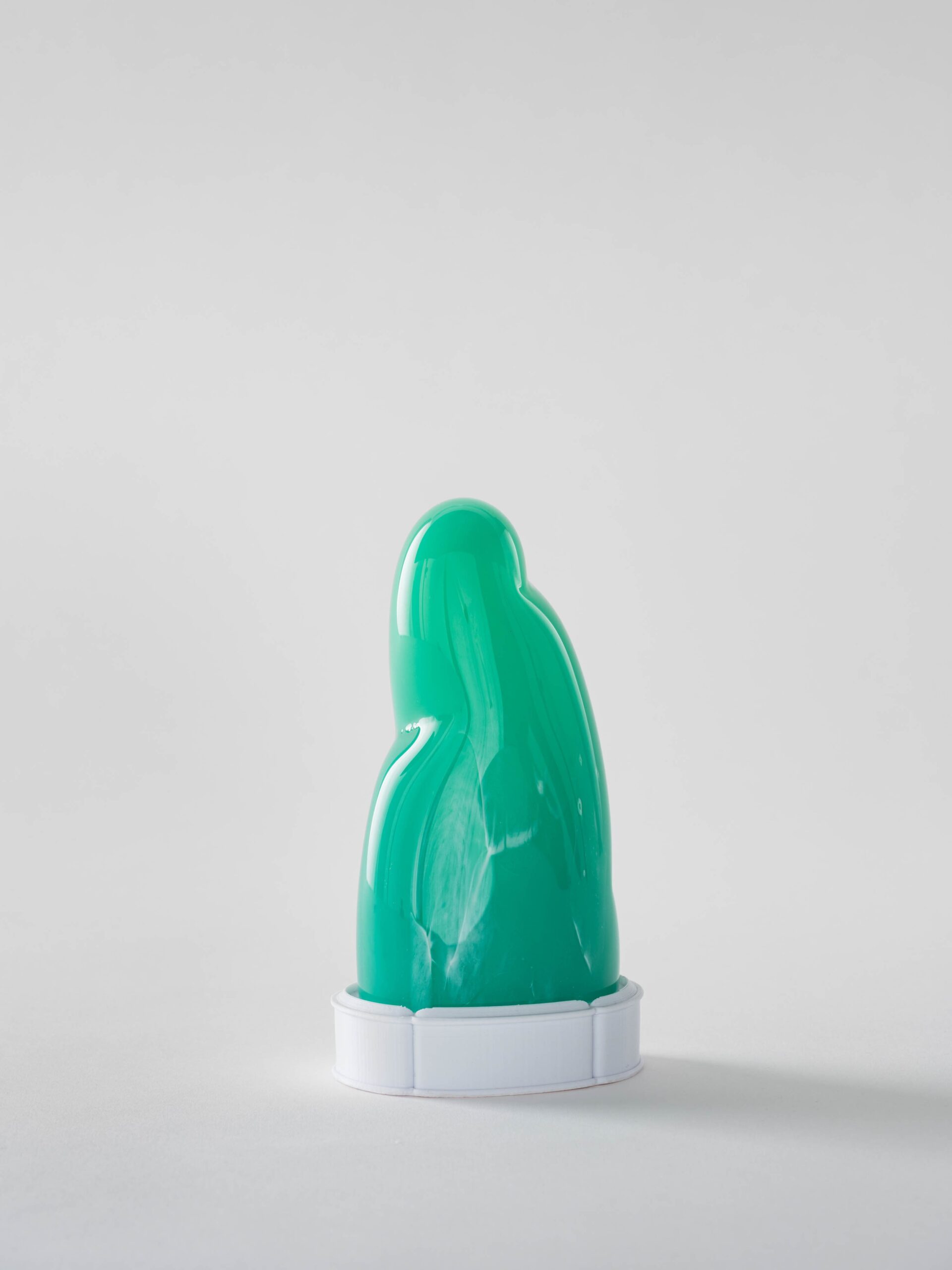
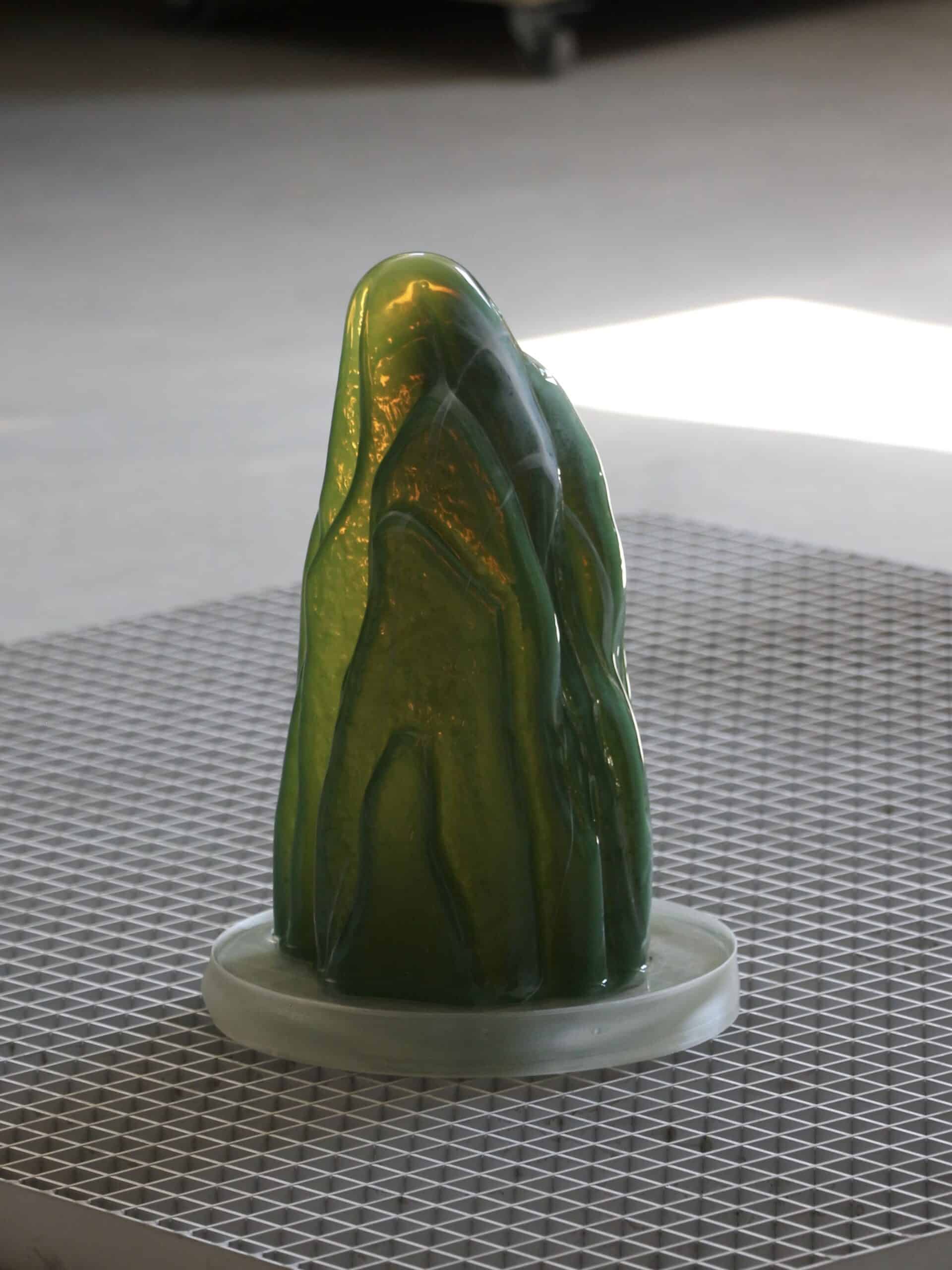
** Speaking more closely about your career: what were the turning points?** Leaving my country more than ten years ago was undoubtedly a crucial step, an intense experience that deeply marked my artistic journey. It was not easy and therefore among the most significant moments, I remember the project realized after years with Sveriges Allmänna Konstförening in 2021: my first great creative research after the transfer to Sweden. This work gave life to the series Stone from Other Mountain, born from a visit to the Östasatiska Museum in Stockholm. At that moment, I felt that I had found a new expressive language, a solid basis for my current artistic direction. Another key hub was my personal exhibition Arahant at Soil Space in Taiwan in 2024. Returning to my homeland after ten years, with a great exhibition, was an intense and almost surreal experience. Taiwan was familiar and at the same time distant, a dimension suspended between the past and the present. This return has awakened in me new questions and insights, which have begun to shape my work in ways that I am still exploring.
The interview with Liu Chien-Kuang marks a new stage of L'ARTE IN FIRST PERSON, a project promoted by Cramum together with Schiavi SpA, under the artistic direction of Sabino Maria Frassà. Discover previous episodes:
Carla Ptolemy: the chairs-sculpture that have reinvented reality for thirty years
To view videos, enable external content in your cookie preferences.